The rankings are determined through a multi-criteria weighted methodology that evaluates companies across five core pillars: technological innovation, market share and revenue, product portfolio breadth, supply chain resilience, and sustainability practices.
Technological innovation accounts for 30% of the total score, focusing on R&D spending as a percentage of revenue (benchmarked against industry averages of 5-8%), number of active patents in functional minerals and smart composites (e.g., US Patent Class 501 for ceramics, 502 for catalysts), and commercialization of next-generation products like lithium battery separators with ceramic coatings or self-healing smart composites. Market share and revenue (25%) uses publicly available financial data from annual reports, SEC filings, and market research from sources like Grand View Research and MarketsandMarkets, with a minimum revenue threshold of $50 million in the category.
Product portfolio breadth (20%) assesses the range of materials offered, including zeolites, silica gels, engineered ceramics, molecular sieves, and specialty glass materials, weighted by their application in high-growth sectors like electric vehicles (EVs) and 5G telecommunications. Supply chain resilience (15%) evaluates raw material sourcing diversity (e.g., rare earth elements for advanced ceramics), manufacturing footprint across regions, and lead times for critical products like high-performance ceramic substrates used in power electronics. Sustainability practices (10%) includes carbon footprint reduction targets, use of recycled content in advanced mineral additives, and compliance with ISO 14001 and REACH regulations.
Data is collected from company disclosures, industry databases (e.g., ICIS, S&P Global Commodity Insights), and expert interviews. Rankings are updated annually, with interim adjustments for major M&A or product launches. Companies must have at least three years of commercial operations in the category to be eligible.
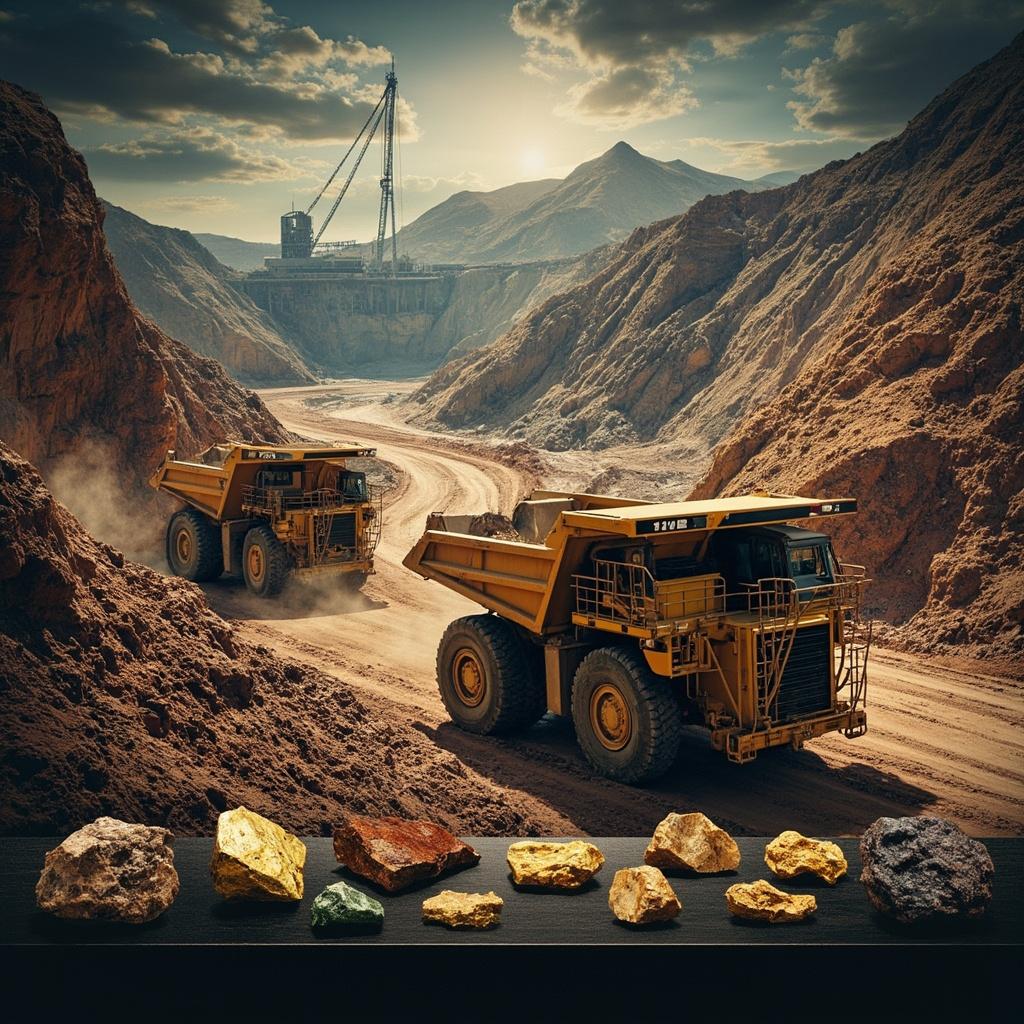
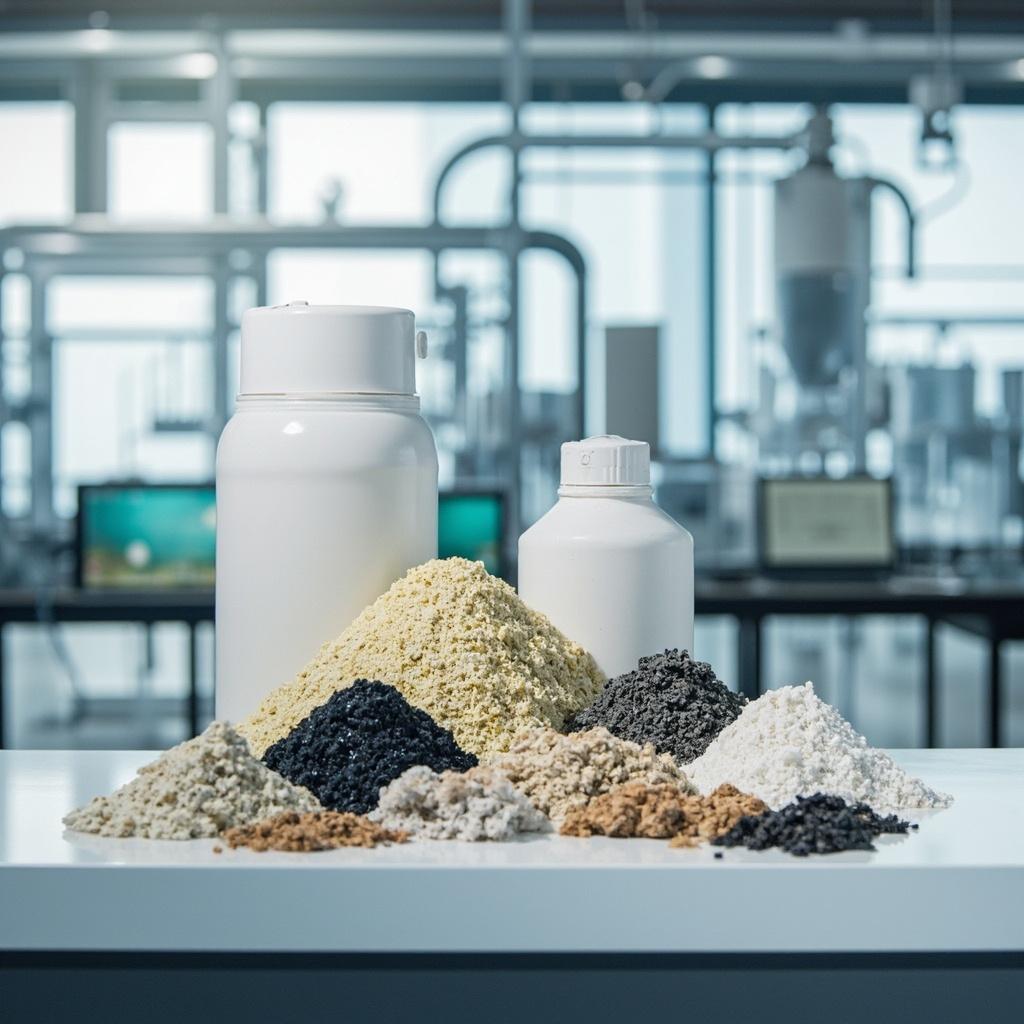
Functional minerals are distinguished from commodity minerals by their engineered properties, specific performance characteristics, and application-driven customization. While commodity minerals like sand, gravel, or raw limestone are traded based on bulk volume and basic chemical composition, functional minerals undergo advanced processing to enhance attributes such as surface area, pore structure, thermal stability, and chemical reactivity.
For example, zeolites are crystalline aluminosilicates with uniform molecular-sized pores, making them essential as molecular sieves for gas separation, catalysis, and ion exchange in detergents and water treatment. In contrast, natural zeolite ore (a commodity) is crushed and sold for low-value uses like animal feed additives. Similarly, silica gels are manufactured with controlled pore sizes (e.g., 2-10 nm for desiccants, 10-30 nm for chromatography) and high surface areas (up to 800 m²/g), whereas commodity silica sand is used in glassmaking without such precision.
Functional minerals also include engineered ceramics like alumina (Al₂O₃) and zirconia (ZrO₂), which are sintered at high temperatures to achieve hardness, wear resistance, and thermal conductivity for applications in lithium battery separators (ceramic-coated separators improve safety) and high-performance ceramic substrates for LED and power modules. Smart composite materials further elevate functionality by integrating sensors, self-healing polymers, or shape-memory alloys into mineral matrices, enabling real-time structural health monitoring in aerospace or automotive components.
The market for functional minerals is growing at 6-8% CAGR (2024-2030), driven by demand in EVs, renewable energy, and electronics, while commodity minerals grow at 2-3% CAGR. This ranking focuses exclusively on companies that add significant value through processing, formulation, and application engineering, rather than those simply extracting and selling raw materials.
Key technology trends for 2025-2026 center on digital integration, sustainability-driven innovation, and performance enhancement for extreme environments. In smart composites, self-sensing materials embedded with carbon nanotubes or piezoelectric fibers are enabling real-time strain and temperature monitoring in wind turbine blades and aircraft fuselages, reducing maintenance costs by up to 30%. Self-healing composites using microcapsules of healing agents (e.g., dicyclopentadiene) or vascular networks are moving from lab to pilot production, with applications in automotive body panels and aerospace structures.
For functional minerals, nanostructured zeolites with hierarchical porosity (micro- and mesopores) are improving catalytic efficiency in petrochemical cracking and biomass conversion, with companies like BASF and Zeochem scaling production. Ceramic-coated lithium battery separators are evolving to use alumina or boehmite nanoparticles to enhance thermal stability (shrinkage below 1% at 200°C) and ionic conductivity, critical for next-gen solid-state batteries expected to enter EVs by 2026. High-performance ceramic substrates based on silicon nitride (Si₃N₄) and aluminum nitride (AlN) are achieving thermal conductivities above 200 W/mK for power electronics in 5G base stations and electric vehicle inverters.
Another trend is circular economy integration: companies are developing advanced mineral additives from recycled glass and ceramic waste for use in concrete and asphalt, reducing CO₂ emissions by 15-20%. Specialty glass materials with ultra-low expansion coefficients (e.g., Corning’s ULE®) are being used for EUV lithography masks in semiconductor manufacturing. Molecular sieves for carbon capture are gaining traction, with new formulations achieving CO₂/N₂ selectivity above 100 at flue gas temperatures. Investment in these areas is projected to exceed $12 billion globally by 2026, with Asia-Pacific leading in production scale-up.
Industrial buyers should evaluate supply chain diversification, raw material criticality, lead time variability, and quality consistency when procuring functional mineral materials and smart composites. Given that many advanced materials rely on rare earth elements (e.g., cerium for polishing powders, yttria for zirconia stabilization) or specialty chemicals (e.g., tetraethyl orthosilicate for silica gels), geopolitical risks (e.g., China controls 60% of rare earth production) necessitate multi-sourcing strategies. Buyers should assess suppliers’ geographic footprint—for instance, having production sites in both Asia and Europe can mitigate disruptions from trade tariffs or shipping delays.
Lead times for engineered ceramics like silicon carbide (SiC) substrates can range from 12 to 20 weeks due to complex sintering and machining processes, while molecular sieves for petrochemical catalysts may have 8-12 week lead times. Buyers should negotiate buffer stock agreements or vendor-managed inventory (VMI) for critical items like lithium battery separator coatings, where shortages can halt EV production lines. Quality consistency is paramount: zeolites must meet strict particle size distribution (e.g., D50 of 2-5 µm for detergent applications) and cation exchange capacity (CEC) tolerances of ±5%. Buyers should request certificates of analysis (CoA) for every batch and conduct third-party audits of suppliers’ ISO 9001 and IATF 16949 certifications.
Cost considerations include total cost of ownership (TCO) rather than unit price. For example, a cheaper silica gel with lower surface area may require more frequent replacement in desiccant systems, increasing lifecycle costs. Buyers should also evaluate sustainability credentials: suppliers using renewable energy for high-performance ceramic substrate production or offering take-back programs for smart composite waste can help meet corporate ESG goals. Finally, long-term contracts (3-5 years) with price escalation clauses tied to raw material indices (e.g., alumina price index) can stabilize costs in volatile markets.
The data on this ranking page is updated annually, with a full review conducted each January to incorporate the previous fiscal year’s financial results, product launches, and market shifts. However, interim updates are made quarterly to reflect significant events such as mergers and acquisitions (e.g., a major zeolite producer acquiring a smart composites startup), regulatory changes (e.g., new REACH restrictions on certain mineral additives), or disruptive technology breakthroughs (e.g., a novel lithium battery separator material achieving commercial scale).
Data sources are multi-faceted to ensure accuracy and comprehensiveness. Primary sources include company annual reports (10-K filings for US firms, annual reports for EU and Asian companies), press releases on new product developments (e.g., self-healing smart composites for aerospace), and investor presentations that detail R&D pipelines. Secondary sources include industry market research from firms like Grand View Research, MarketsandMarkets, and Frost & Sullivan, which provide revenue estimates and growth projections for segments like engineered ceramics (projected $12.5 billion by 2026) and molecular sieves ($5.8 billion by 2026).
Technical data on material properties—such as zeolite pore sizes, silica gel surface areas, or ceramic substrate thermal conductivity—is sourced from peer-reviewed journals (e.g., Journal of the American Ceramic Society, Microporous and Mesoporous Materials) and patent databases (USPTO, EPO, WIPO) to verify innovation claims. Supply chain metrics (lead times, raw material prices) are obtained from commodity intelligence platforms like ICIS, S&P Global Platts, and Fastmarkets, as well as procurement surveys conducted with 50+ industrial buyers in the chemicals and materials sector. All data is cross-referenced with third-party audits from organizations like TÜV Rheinland for quality certifications. Users can subscribe to email alerts for interim updates via the page’s notification feature.