在维瑞评级,我们的排名方法基于数据,而非主观意见。我们汇总并交叉验证来自多个权威第三方来源的信息,以生成尽可能客观的行业排名。
1. 数据来源——多源交叉验证
我们的主要数据来自四大支柱:
• 国家统计机构:主要经济体的政府统计局提供关于产量、贸易流量和行业收入的已验证数据。
• 大学附属研究机构:来自麻省理工学院、苏黎世联邦理工学院、清华大学和伦敦政治经济学院等顶尖机构的同行评审研究,提供对技术趋势和市场动态的洞察。
• 人工智能驱动的全球消费者情绪分析:自然语言处理算法分析超过40种语言的数百万条评论、社交媒体帖子和买家反馈。
• 上市公司财务报告:美国证券交易委员会文件、年度报告、财报电话会议记录和ESG披露提供已验证的收入数据、研发支出和利润率。
2. 四维评分模型
每家公司从四个权重相等的维度进行评估:
• 市场影响力(25%):全球市场份额、收入规模、分销网络、服务国家数量、增长率。
• 品牌声誉(25%):评级、奖项、认证、媒体情绪、品牌认知度。
• 创新与研发(25%):有效专利、研发投入、产品发布、技术合作伙伴关系。
• 可持续性与道德(25%):环境认证、碳减排、劳工实践、供应链透明度。
3. 我们对独立性的承诺
我们不接受排名付费。任何公司都无法通过付费提升排名。排名每季度更新一次。
免责声明:数据来自第三方权威来源,仅供参考和市场决策支持,不构成直接的投资建议或品牌背书。
At Verity Rank, our ranking methodology is built on data, not opinions. We aggregate and cross-validate information from multiple authoritative third-party sources to produce the most objective industry ranking possible.
1. Data Sources — Multi-Source Cross-Verification
Our primary data comes from four pillars:
• National Statistical Agencies: Government statistical bureaus across major economies provide verified data on production volumes, trade flows, and industry revenues.
• University-Affiliated Research Institutions: Peer-reviewed studies from leading institutions including MIT, ETH Zurich, Tsinghua University, and LSE provide insights into technology trends and market dynamics.
• AI-Driven Global Consumer Sentiment Analysis: NLP algorithms analyze millions of reviews, social media posts, and buyer feedback across 40+ languages.
• Publicly Listed Company Financial Reports: SEC filings, annual reports, earnings transcripts, and ESG disclosures provide verified revenue data, R&D spending, and profit margins.
2. The Four-Dimensional Scoring Model
Each company is evaluated across four equally weighted dimensions:
• Market Influence (25%): Global market share, revenue scale, distribution network, countries served, growth rate.
• Brand Reputation (25%): Ratings, awards, certifications, media sentiment, brand recognition.
• Innovation & R&D (25%): Active patents, R&D investment, product launches, technology partnerships.
• Sustainability & Ethics (25%): Environmental certifications, carbon reduction, labor practices, supply chain transparency.
3. Our Commitment to Independence
We do not accept payment for rankings. No company can pay to improve its position. Rankings are updated quarterly.
Disclaimer: The data is compiled from third-party authoritative sources and intended for reference and market decision support only. It does not constitute direct investment advice or brand endorsement.
管道和电气系统行业是现代建筑的基石,涵盖为建筑物(从独栋住宅到摩天大楼和工业综合体)输送水、气和电的产品制造。全球市场规模超过2500亿美元,并以每年7%的速度增长,该行业是城市化、基础设施现代化和全球能源转型的基础。
主要产品类别:
• 水管材料(7.1):用于饮用水、排水和工业流体输送的PVC、CPVC、PEX、HDPE、铜和多层复合管。由于耐腐蚀性、安装成本更低和使用寿命更长,从金属管向聚合物管的转变仍在继续。
• 电线电缆(7.2):建筑电线(THHN/THWN)、电力电缆(低/中/高压)、光纤电缆、数据通信电缆(Cat6/Cat7)、耐火电缆以及用于可再生能源和电动汽车充电基础设施的专用电缆。这是最大的子领域,由电气化和人工智能数据中心需求驱动。
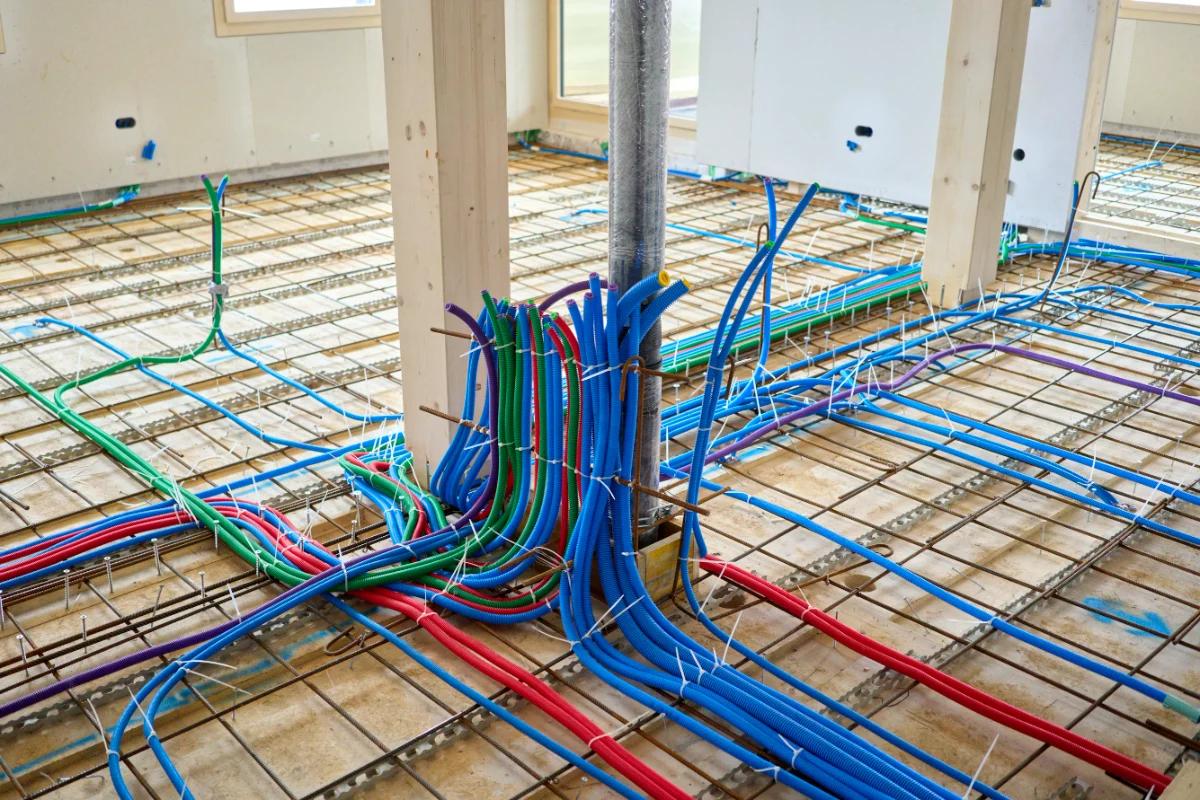
• 地板供暖系统(7.3):水暖和电热地板供暖系统,包括PEX管、分集水器、恒温器和保温板。在住宅和商业改造中快速增长。
• 管件和阀门(7.4):弯头、三通、管箍、活接头、法兰、球阀、闸阀、止回阀和调压阀,材质包括黄铜、不锈钢、PVC和工程聚合物。精密制造和材料认证至关重要。
• 水净化解决方案(7.5):过滤系统、反渗透装置、紫外线杀菌、软水器和终端处理设备——越来越多地集成到智能建筑水管理中。
行业动态:该行业受三大趋势影响:电气化(电动汽车充电、热泵、建筑电气化)、数字化(智能计量、泄漏检测、物联网建筑管理)和可持续性(无铅材料、可回收聚合物、低碳制造)。由于重量价值比,该行业高度区域化,制造商在生产设施上靠近主要建筑市场。
The plumbing and electrical systems industry is a cornerstone of modern construction, encompassing the manufacturing of products that deliver water, gas, and electricity throughout buildings — from single-family homes to skyscrapers and industrial complexes. With a global market exceeding $250 billion and growing at 7% annually, this sector is foundational to urbanization, infrastructure modernization, and the global energy transition.
Major Product Categories:
• Water Pipe Materials (7.1): PVC, CPVC, PEX, HDPE, copper, and multi-layer composite pipes for potable water, drainage, and industrial fluid transport. The shift from metal to polymer pipes continues, driven by corrosion resistance, lower installation costs, and longer service life.
• Wires & Cables (7.2): Building wire (THHN/THWN), power cables (low/medium/high voltage), fiber optic cables, data communication cables (Cat6/Cat7), fire-resistant cables, and specialized cables for renewable energy and EV charging infrastructure. This is the largest sub-segment, driven by electrification and AI data center demand.
• Floor Heating Systems (7.3): Hydronic (water-based) and electric underfloor heating systems, including PEX tubing, manifolds, thermostats, and insulation panels. Growing rapidly in residential and commercial retrofits.
• Pipe Fittings & Valves (7.4): Elbows, tees, couplings, unions, flanges, ball valves, gate valves, check valves, and pressure-regulating valves in brass, stainless steel, PVC, and engineered polymers. Precision manufacturing and material certification are critical.
• Water Purification Solutions (7.5): Filtration systems, reverse osmosis units, UV sterilization, water softeners, and point-of-use treatment devices — increasingly integrated into smart building water management.
Industry Dynamics: The sector is shaped by three megatrends: electrification (EV charging, heat pumps, building electrification), digitization (smart metering, leak detection, IoT-enabled building management), and sustainability (lead-free materials, recyclable polymers, low-carbon manufacturing). The industry is highly regionalized due to weight-to-value ratios, with manufacturers maintaining production facilities close to major construction markets.
管道和电气系统行业处于高分��化学、冶金学、电气工程和精密制造的交叉点——需要复杂的工艺控制和严格的质量标准。
1. 管道制造技术: • 挤出成型:PVC、CPVC、HDPE和PEX管通过连续挤出工艺高速生产(最高100米/分钟)。多层共挤出将不同聚合物结合以获得特定性能——例如,地板供暖管的氧气阻隔层。 • 注塑成型:管件在高腔注塑模具(最多128腔)中生产,周期时间低于30秒。 • 交联:PEX管使用过氧化物(PEX-a)、硅烷(PEX-b)或电子束(PEX-c)交联以提高耐温耐压性能。
2. 电缆制造: • 拉丝:铜或铝杆通过逐渐变小的金刚石模具拉拔,以达到所需的导体直径。 • 绞合:多根导线绞合在一起以提高柔韧性和载流量。 • 绝缘挤出:导体在连续硫化(CV)线上涂覆PVC、XLPE(交联聚乙烯)或EPR(乙丙橡胶)。 • 铠装和护套:钢丝或钢带铠装提供机械保护,然后加上外护套。
3. 质量标准: • ASTM:ASTM D1785(PVC管)、ASTM F876(PEX)、ASTM B3(铜线)。 • ISO:ISO 4427(PE管)、ISO 1452(PVC-U管)、ISO 9001(质量管理)。 • IEC:IEC 60228(导体)、IEC 60502(电力电缆)。 • NSF/ANSI 61:饮用水系统组件——健康影响。 • UL:UL 83(热塑性绝缘电线)、UL 44(热固性绝缘电线)。 • 防火性能:IEC 60332(阻燃性)、IEC 61034(烟密度)、CPR(欧盟建筑产品法规)。
4. 新兴技术: • 无损检测:超声波、X射线和涡流检测用于质量保证。 • 智能管道:嵌入光纤传感器用于泄漏检测和结构健康监测。 • 绿色材料:生物基PVC、再生铜/铝、无铅黄铜合金。 • 预制化:模块化MEP(机械、电气、管道)系统在工厂组装,以加快施工速度。
The plumbing and electrical systems industry operates at the intersection of polymer chemistry, metallurgy, electrical engineering, and precision manufacturing — requiring sophisticated process control and rigorous quality standards.
1. Pipe Manufacturing Technologies: • Extrusion: PVC, CPVC, HDPE, and PEX pipes are produced through continuous extrusion processes at high speeds (up to 100m/min). Multi-layer co-extrusion combines different polymers for specific properties — e.g., oxygen barrier layers for floor heating pipes. • Injection Molding: Pipe fittings are produced in high-cavitation injection molds (up to 128 cavities) with cycle times under 30 seconds. • Cross-linking: PEX pipes use peroxide (PEX-a), silane (PEX-b), or electron beam (PEX-c) cross-linking to improve temperature and pressure resistance.
2. Cable Manufacturing: • Wire Drawing: Copper or aluminum rod is drawn through progressively smaller diamond dies to achieve the required conductor diameter. • Stranding: Multiple wires are twisted together for flexibility and current-carrying capacity. • Insulation Extrusion: Conductors are coated with PVC, XLPE (cross-linked polyethylene), or EPR (ethylene propylene rubber) in continuous vulcanization (CV) lines. • Armoring and Sheathing: Steel wire or tape armor for mechanical protection, followed by outer sheathing.
3. Quality Standards: • ASTM: ASTM D1785 (PVC pipe), ASTM F876 (PEX), ASTM B3 (copper wire). • ISO: ISO 4427 (PE pipes), ISO 1452 (PVC-U pipes), ISO 9001 (quality management). • IEC: IEC 60228 (conductors), IEC 60502 (power cables). • NSF/ANSI 61: Drinking water system components — health effects. • UL: UL 83 (thermoplastic-insulated wires), UL 44 (thermoset-insulated wires). • Fire performance: IEC 60332 (flame retardance), IEC 61034 (smoke density), CPR (EU Construction Products Regulation).
4. Emerging Technologies: • Non-destructive testing: Ultrasonic, X-ray, and eddy current inspection for quality assurance. • Smart pipes: Embedded fiber optic sensors for leak detection and structural health monitoring. • Green materials: Bio-based PVC, recycled copper/aluminum, lead-free brass alloys. • Prefabrication: Modular MEP (mechanical, electrical, plumbing) systems assembled off-site for faster construction.
采购管道和电气产品——无论是用于建筑项目、批发分销商还是工业采购团队——都需要在一个高度监管和安全关键的行业中评估技术规格、法规合规性、供应链可靠性和全生命周期成本。
1. 产品认证与合规性:确认产品持有目标市场所需的认证——UL认证(美国)、CSA(加拿大)、CE标志(欧盟)、CCC(中国)、AS/NZS(澳大利亚/新西兰)。对于接触水的产品:NSF/ANSI 61、WRAS(英国)、ACS(法国)、KTW/DVGW(德国)。对于消防安全:CPR分类(欧盟)、UL 94阻燃等级。不合规产品可能导致项目被拒、责任索赔和安全风险。
2. 技术规格:明确具体要求——管道压力等级(PN6-PN25)、温度等级、耐化学性、紫外线稳定性、接头类型(溶剂粘接、机械连接、推入式、熔接)和尺寸。对于电缆:导体材料(铜与铝)、绝缘类型(PVC、XLPE、LSZH)、电压等级、载流量和安装环境(室内、室外、直埋、穿管)。
3. 供应链与交货时间:管道和电气产品是大宗商品——运输成本可能超过材料成本。评估供应商与项目现场的 proximity、仓库容量和配送物流。长交货期产品(定制电缆组件、大口径特种管道)需要提前订购。了解供应商的原材料采购——铜和PVC树脂价格波动大。
4. 保修与生命周期成本:评估保修范围(管道通常10-25年,电缆5-10年)。考虑全生命周期成本——安装人工、维护和更换频率。使用寿命更长的优质产品通常具有更低的50年总拥有成本。
5. 可持续性与ESG:要求提供环境产品声明(EPD)、回收含量百分比和碳足迹数据。绿色建筑认证(LEED、BREEAM、Green Star)为可持续材料选择加分。无铅和低VOC产品在发达市场越来越成为强制要求。
Sourcing plumbing and electrical products — whether for a construction project, a wholesale distributor, or an industrial procurement team — requires evaluating technical specifications, regulatory compliance, supply chain reliability, and total lifecycle cost in a highly regulated and safety-critical industry.
1. Product Certifications & Compliance: Verify that products carry the required certifications for your target market — UL listing (US), CSA (Canada), CE marking (EU), CCC (China), AS/NZS (Australia/New Zealand). For water contact: NSF/ANSI 61, WRAS (UK), ACS (France), KTW/DVGW (Germany). For fire safety: CPR classification (EU), UL 94 flame rating. Non-compliant products can lead to project rejection, liability claims, and safety hazards.
2. Technical Specifications: Define precise requirements — pipe pressure ratings (PN6-PN25), temperature ratings, chemical resistance, UV stability, joint type (solvent weld, mechanical, push-fit, fusion), and dimensions. For cables: conductor material (copper vs. aluminum), insulation type (PVC, XLPE, LSZH), voltage rating, ampacity, and installation environment (indoor, outdoor, direct burial, conduit).
3. Supply Chain & Lead Times: Plumbing and electrical products are bulk commodities — transportation costs can exceed material costs. Evaluate supplier proximity to project sites, warehouse capacity, and delivery logistics. Long lead-time items (custom cable assemblies, large-diameter specialty pipes) require early ordering. Understand the supplier's raw material sourcing — copper and PVC resin prices are volatile.
4. Warranty & Lifecycle Cost: Evaluate warranty coverage (typically 10-25 years for pipes, 5-10 years for cables). Consider total lifecycle cost — installation labor, maintenance, and replacement frequency. Premium products with longer service life often have lower 50-year total cost of ownership.
5. Sustainability & ESG: Request Environmental Product Declarations (EPDs), recycled content percentages, and carbon footprint data. Green building certifications (LEED, BREEAM, Green Star) award points for sustainable material choices. Lead-free and low-VOC products are increasingly mandatory in developed markets.
全球管道和电气系统行业由来自欧洲、北美和亚洲的工业集团主导——每个地区在制造规模、技术领先性和市场准入方面都具有独特的竞争优势。
1. 欧洲——技术与高端制造:欧洲制造商在高端电缆和精密管道系统方面处于领先地位。普睿司曼集团(意大利)是全球最大的电缆制造商,收入200亿欧元,拥有100多家工厂,在海缆和光纤领域领先。耐克森(法国)收入78亿欧元,专注于电气化。乔治费歇尔(瑞士)拥有200多年历史,在高端聚合物管道和流体控制系统方面占据主导地位。欧洲公司在研发强度、高端定位和可持续性领导力方面表现出色。
2. 北美——基础设施规模:南线公司(美国)是北美最大的私有电缆制造商,收入约84亿美元,凭借其专有的铜杆技术主导北美建筑电线市场。Orbia/Wavin(墨西哥/荷兰)收入76亿美元,通过上游化学整合——从PVC树脂到成品管道——在聚合物管道系统方面处于领先地位。北美的优势来自庞大的国内建筑市场和整合的供应链。
3. 亚太——产量与增长:住友电工(日本)是一家收入4.68万亿日元、拥有28.8万名员工的综合性企业,将电缆制造与汽车、电子和可再生能源相结合。LS电缆与系统(韩国)收入7.58万亿韩元,正在积极拓展北美市场。亨通集团(中国)收入约6690亿元人民币,是中国最大的电力电缆和光纤光缆制造商,并日益成为全球力量。中天科技集团(中国)收入超过135亿美元,专注于海缆、智能电网和储能。中国联塑集团是亚洲最大的塑料管材制造商,运营30多家工厂,年产量329万吨。
4. 战略趋势:该行业正在快速整合——普睿司曼以39亿美元收购Encore Wire,耐克森收购Republic Wire,表明争夺北美市场份额的竞赛。人工智能数据中心建设正在创造对高压电缆和光纤电缆前所未有的需求。向预制MEP系统和智能建筑集成的转变,奖励那些在传统制造优势之外投资数字能力的制造商。
The global plumbing and electrical systems industry is dominated by industrial conglomerates from Europe, North America, and Asia — each region bringing distinct competitive advantages in manufacturing scale, technology leadership, and market access.
1. Europe — Technology & Premium Manufacturing: European manufacturers lead in high-value cables and precision pipe systems. Prysmian Group (Italy) is the world's largest cable manufacturer with €20B revenue, 100+ factories, and leadership in submarine cables and fiber optics. Nexans (France) with €7.8B revenue focuses on electrification. Georg Fischer (Switzerland), with 200+ years of heritage, dominates premium polymer piping and fluid control systems. European companies excel in R&D intensity, premium positioning, and sustainability leadership.
2. North America — Infrastructure Scale: Southwire Company (USA), the largest privately held cable manufacturer at ~$8.4B revenue, dominates North American building wire markets with its proprietary copper rod technology. Orbia/Wavin (Mexico/Netherlands), with $7.6B revenue, leads in polymer pipe systems through upstream chemical integration — from PVC resin to finished pipes. North American strength comes from massive domestic construction markets and integrated supply chains.
3. Asia-Pacific — Volume & Growth: Sumitomo Electric (Japan), a ¥4.7 trillion conglomerate with 288,000 employees, combines cable manufacturing with automotive, electronics, and renewable energy. LS Cable & System (South Korea) with ₩7.6 trillion revenue is expanding aggressively into North American markets. Hengtong Group (China), with ~¥670B revenue, is China's largest power and fiber optic cable manufacturer and a growing global force. ZTT Group (China), with $13.5B+ revenue, specializes in submarine cables, smart grids, and energy storage. China Lesso Group, Asia's largest plastic pipe manufacturer, operates 30+ factories producing 3.29 million tons annually.
4. Strategic Trends: The industry is consolidating rapidly — Prysmian's $3.9B Encore Wire acquisition and Nexans' Republic Wire purchase demonstrate the race for North American market share. AI data center construction is creating unprecedented demand for high-voltage and fiber optic cables. The shift toward prefabricated MEP systems and smart building integration is rewarding manufacturers who invest in digital capabilities alongside traditional manufacturing excellence.