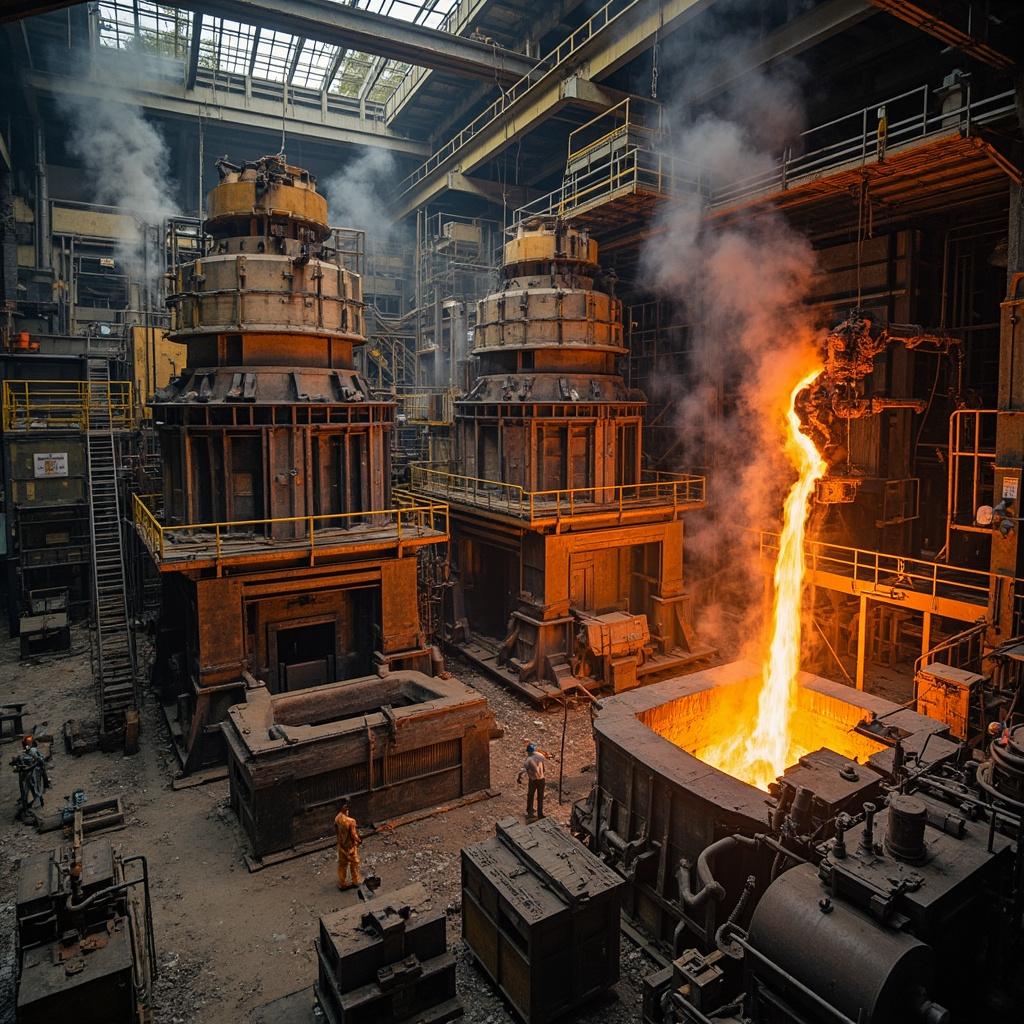
VerityRank employs a rigorous manufacturing-capability-focused methodology to evaluate and rank mineral-based consumer goods manufacturers worldwide. Unlike brand rankings that prioritize consumer-facing metrics such as marketing reach and social media engagement, our manufacturer assessment prioritizes production self-sufficiency, mine-to-factory vertical integration, in-house processing capabilities, and manufacturing technology infrastructure. This methodology is specifically designed to distinguish genuine manufacturing leaders from asset-light brand operators and contract manufacturing intermediaries.
Manufacturing Self-Sufficiency Assessment is the foundational evaluation criterion. We evaluate each company degree of vertical integration, from owned mineral extraction rights and mining operations through in-house crushing, milling, purification, and processing to finished consumer product manufacturing. Companies that rely on contract manufacturing or third-party toll processing for any critical production stage are excluded entirely from this ranking, regardless of their brand recognition or revenue scale. This exclusion criterion ensures that only companies with genuine manufacturing capabilities and direct control over their production quality and mineral supply chains appear in our manufacturer rankings.
Production Scale Verification analyzes quantitative manufacturing metrics. We examine total manufacturing output volumes measured in physical units or tonnage, the number and geographic distribution of owned production facilities worldwide, total manufacturing workforce as reported in corporate filings and stock exchange disclosures, and capital expenditure on manufacturing infrastructure as a percentage of revenue. These quantitative metrics are cross-validated against independent industry databases, satellite imagery of manufacturing facilities, and trade publication production estimates.
Technology and Purity Infrastructure Assessment evaluates manufacturing sophistication. We assess investment in advanced kiln and furnace technologies including electric arc and microwave-assisted systems, ICP-MS and XRF mineral purity testing systems for heavy metal and asbestos screening, robotic automation penetration in manufacturing lines, and carbon reduction initiatives including renewable energy adoption and waste heat recovery systems. Companies with in-house analytical chemistry laboratories and ISO-certified quality management systems receive significant scoring advantages.
Regular Updates: Rankings are updated annually to reflect new facility investments, mining right acquisitions, production capacity expansions, manufacturing technology upgrades, and regulatory compliance developments. Major corporate events such as factory divestitures or significant environmental compliance failures may trigger off-cycle review updates.
A true vertically integrated mineral products manufacturer controls every stage of production from raw mineral extraction through finished consumer product, a model fundamentally different from brand licensing or contract manufacturing that dominates many consumer goods categories. This distinction is critically important because mineral purity, processing consistency, and supply chain security depend entirely on manufacturing ownership and control, not brand marketing sophistication.
The gold standard of vertical integration is the mine-to-factory model, where processing and manufacturing facilities are built directly atop or within the immediate radius of mineral deposits to eliminate raw material transportation costs and third-party quality risks. Jianping Petstar in China exemplifies this approach with its front-mine-back-factory sodium bentonite operation in Liaoning Province, where raw clay is extracted, crushed, dried, and packaged into finished cat litter within a single integrated facility. Ittefaq Trading Co. in Pakistan owns and directly operates Himalayan rock salt mines with on-site block cutting and hand-carving facilities, controlling 100% of production from geological deposit to finished salt lamp or cooking slab.
Large-scale integrated manufacturers like Imerys demonstrate an even more ambitious model, operating approximately 180 mining and processing sites globally across 40 countries with 12,300 employees. Imerys controls the entire value chain from mineral exploration and mine development through advanced beneficiation and micronization to delivery of cosmetic-grade talc and kaolin to the world largest beauty brands. This scale of vertical integration creates barriers to entry that are essentially insurmountable for new market entrants, as replicating the mining rights, processing infrastructure, and regulatory permits would require decades and billions in capital investment.
In sharp contrast, asset-light brand operators represent the opposite end of the manufacturing spectrum. Companies like Dr Teal and bareMinerals own no manufacturing facilities whatsoever, employing fewer than 500 and 2,700 people respectively while generating hundreds of millions in revenue. They purchase commodity minerals from third-party suppliers and outsource all production to contract manufacturers. While this model enables rapid scaling and capital efficiency, it introduces mineral quality variability, supply chain disruption risks, and potential regulatory compliance gaps that vertically integrated manufacturers systematically avoid through direct operational control.
Our manufacturer ranking exclusively evaluates companies with substantial in-house production capabilities, rewarding those who invest capital and organizational resources in building and maintaining their own mining, mineral processing, and finished goods manufacturing infrastructure rather than outsourcing these critical functions to third parties.
The mineral consumer goods manufacturing industry is undergoing a fundamental energy transition driven by the convergence of tightening carbon regulations, volatile natural gas prices, and the physics of high-temperature mineral processing. Traditional clay sintering, glass melting, and ceramic firing operations consume massive quantities of natural gas and electricity, making energy simultaneously the largest variable cost and the largest environmental impact for most mineral manufacturers.
Two breakthrough technologies are reshaping the industry energy paradigm. First, Swarovski has commissioned and successfully operates the world first fully electric continuous crystal glass furnace at its Wattens, Austria headquarters. This pioneering installation completely eliminates fossil fuel dependency from the core crystal melting process that has defined the company manufacturing heritage for over 125 years. The electric furnace maintains precise temperature control across the entire melt pool while reducing the facility Scope 1 carbon emissions to near zero for the melting operation. Second, Kyocera Corporation has invested 50 billion yen in fully robotic ceramic sintering lines with advanced heat recovery and cogeneration systems at its Shiga Higashiomi plant in Japan, dramatically reducing energy consumption per unit of finished ceramic output while simultaneously improving product quality consistency through elimination of human handling variability.
Villeroy and Boch participates in Germany KlimPro-Industrie II research consortium, developing microwave radio-frequency assisted drying systems that reduce water content in ceramic bodies before firing, and low-water-consumption ceramic slurry formulations incorporating secondary recycled clay minerals. These innovations have reduced kiln firing time by 15% and total energy consumption per finished ceramic piece by over 20%, demonstrating that sustainability investments can deliver simultaneous cost reduction and quality improvement benefits.
The competitive implications of this energy transition are profound and accelerating. Manufacturers who invested early in electric and hybrid heating technologies are now achieving lower per-unit energy costs than competitors still reliant on natural gas, particularly in regions where carbon pricing mechanisms are increasing fossil fuel costs. As carbon border adjustment mechanisms expand globally, manufacturers with verifiably lower carbon footprints will gain preferential market access while high-emission competitors face escalating cost disadvantages. Energy transition leadership has evolved from a corporate social responsibility initiative into a hard-nosed competitive advantage that will increasingly determine manufacturing viability in the mineral consumer goods sector.
Consumer mineral product manufacturers face an escalating regulatory compliance burden centered on trace contaminant detection, particularly asbestos fibers in talc and kaolin products used in cosmetics, personal care, and pharmaceutical applications. The regulatory landscape has been fundamentally reshaped by high-profile litigation against major mining companies, creating a compliance environment where inadequate purity testing infrastructure represents an existential business risk rather than a manageable operational concern.
The most consequential case study in mineral product liability is Minerals Technologies Inc. and its former talc subsidiary Barretts Minerals. Barretts Minerals, which operated talc mining and processing facilities supplying cosmetic-grade talc to global personal care brands, filed Chapter 11 bankruptcy protection after facing over 550 individual asbestos contamination lawsuits related to talcum powder products. MTI was forced to record a $215 million litigation reserve on its corporate balance sheet and subsequently divested the entire subsidiary to Riverspan Partners for just $32 million, representing a catastrophic loss of shareholder value. The Barretts case established that mineral purity failures can destroy hundreds of millions in enterprise value even at companies with otherwise strong financial fundamentals.
Leading manufacturers have responded by building proprietary purity testing infrastructure that creates regulatory compliance moats. Imerys has established dedicated pharmaceutical and cosmetic-grade mineral processing lines with full chain-of-custody traceability from specific mine faces through finished micronized powder, supported by in-house ICP-MS (Inductively Coupled Plasma Mass Spectrometry) laboratories capable of detecting trace contaminants at parts-per-billion concentrations. This level of purity testing infrastructure requires multi-million dollar capital investments and specialized scientific personnel that smaller competitors and contract manufacturers cannot economically replicate.
The FDA and EuropeanUnion have dramatically tightened asbestos screening requirements for cosmetic and personal care-grade minerals, mandating analytical methods capable of detecting amphibole asbestos fibers at concentrations below 0.1% by weight. These requirements effectively mandate the use of transmission electron microscopy (TEM) and X-ray diffraction (XRD) techniques that are available only in well-equipped analytical laboratories. Companies that invested early in these capabilities, including Kyocera and Noritake with their decades of advanced ceramic materials characterization expertise, now possess regulatory compliance advantages that will become increasingly valuable as global safety standards continue to tighten across all major consumer markets.
The global mineral consumer goods manufacturing landscape reveals a striking geographic specialization pattern, with Japanese, European, Chinese, and South Asian manufacturers dominating fundamentally different segments of the value chain based on historical industrial development paths, natural resource endowments, and comparative institutional advantages. Understanding these geographic specializations is essential for procurement professionals, investors, and industry analysts evaluating manufacturing capabilities and competitive dynamics.
Japanese manufacturers including Kyocera, TOTO, and Noritake lead in advanced ceramic processing and precision manufacturing. These companies leverage decades of sustained investment in ultra-high-temperature sintering technology capable of exceeding 1,600 degrees Celsius, sub-micron mineral powder refinement using proprietary milling techniques, and comprehensive robotic automation developed through Japan world-leading industrial robotics industry. Kyocera alone operates nearly 30 fully owned ceramic manufacturing plants worldwide and produces over 60 million consumer ceramic items annually. Japanese manufacturers compete primarily on technological sophistication, material purity, and manufacturing precision rather than raw material cost or production volume, commanding premium pricing justified by superior product performance characteristics.
European manufacturers including Imerys, Villeroy and Boch, and Swarovski dominate high-purity mineral processing and luxury consumer goods manufacturing. Imerys controls approximately 180 mining and processing sites globally and supplies cosmetic-grade talc and kaolin meeting the most stringent pharmaceutical purity standards to the world largest beauty and personal care brands. Villeroy and Boch 277-year-old ceramic manufacturing heritage, supported by 15 owned production facilities and 11,783 employees, commands premium pricing in global luxury tableware and bathroom ceramics markets. European manufacturers benefit from centuries of accumulated technical knowledge, strong intellectual property protection, and premium brand positioning that allows them to maintain profitability despite higher labor and energy costs than Asian competitors.
Chinese manufacturers including Petstar and Songfa are rapidly emerging as cost-competitive production powerhouses. Leveraging China abundant bentonite, kaolin, and rare earth mineral deposits combined with world-class industrial infrastructure and increasingly sophisticated manufacturing automation, Chinese producers are progressively moving from B2B private-label manufacturing toward branded consumer products. Petstar front-mine-back-factory model in Liaoning Province eliminates raw material transportation costs that represent a significant expense for Western manufacturers, while Songfa transformation through reverse merger with Hengli Heavy Industry demonstrates Chinese manufacturers ability to access capital markets for rapid scaling.
South Asian manufacturers like Ittefaq Trading Co. in Pakistan leverage unique geographic mineral monopolies. Ittefaq ownership of Himalayan rock salt mines, combined with Pakistan position as the sole source of authentic pink Himalayan salt, creates an irreplicable geographic advantage. While revenue scale remains modest at approximately $35 million, the absolute geographic monopoly on Himalayan salt extraction provides pricing power and market positioning that no competitor can challenge without access to the same geological deposits. This geographic specialization pattern suggests that manufacturing leadership in mineral consumer goods will remain distributed across multiple regions, with each geography leveraging its unique combination of natural resources, technical expertise, and institutional advantages.