




康宁公司
Corning Incorporated 是特种玻璃与陶瓷领域的全球领导者,核心业务涵盖显示器玻璃基板、光通信及先进材料。该公司成立于1851年,总部位于纽约州康宁市,2025财年GAAP营收为156.3亿美元(核心营收164.1亿美元),在全球约40个国家拥有67,200名员工。康宁运营着超过145处设施,包括77个核心制造基地

京瓷
京瓷株式会社是全球先进精细陶瓷与电子陶瓷基板领域无可争议的领导者,于1959年在日本京都创立。公司年营收约1335亿美元,在多个大洲运营279家子公司,全球员工总数达73,856人。京瓷率先实现了从陶瓷粉末合成、流延成型、精密金属化到半导体三维封装的全垂直…
品牌
京瓷
成立时间
1959
员工规模
73,856
覆盖范围
全球(北美、欧洲、亚洲含中国)
生产基地
全球279家子公司,在日本、北美、欧洲及亚洲(含中国多地)拥有数十座大型工厂
总部
日本

欧米亚国际
欧米亚国际集团是一家瑞士家族所有的全球领先的工业矿物、特种化学品及聚合物分销企业,总部位于瑞士奥夫特林根。公司在50多个国家运营着175多家工厂,拥有约9,000名员工。欧米亚在用于造纸、塑料、涂料和农业的研磨碳酸钙(GCC)全球市场占据主导地位。2025年,公司在收购Distrupol后推出了新的高性能聚合物分销部门,从…

RHI马格尼塔
奥镁集团是全球耐火材料产品及解决方案的市场领导者,由奥地利的RHI和巴西的Magnesita合并而成。集团总部位于奥地利维也纳,在35多个国家运营着47个生产基地和70多个销售办事处,拥有约13,500名员工。奥镁集团每年生产超过300万吨耐火材料,服务于钢铁制造、水泥生产、玻璃制造及有色…
品牌
RHI马格尼塔
成立时间
1834 (RHI) / 2017 (merger)
员工规模
1.6万
覆盖范围
覆盖20多个国家,遍及欧洲、美洲、亚洲和非洲
生产基地
在20多个国家拥有47个生产基地
总部
奥地利
市场
伦敦证交所:RHIM

Imerys公司
Imerys是全球领先的工业矿物解决方案提供商,总部位于法国巴黎。公司在40多个国家开展业务,拥有约18,000名员工,凭借涵盖20多种工业矿物的无与伦比的产品组合(加工成数千种高附加值产品),在2025财年实现55亿欧元营收。Imerys在高岭土、碳酸钙、滑石、膨润土和特种氧化铝领域占据全球市场主导地位,服务于造纸、塑料、建筑、化妆品、制药及环保应用等多元化终端市场。公司已战略性拓展至能源转型矿物领域,包括在法国启动的标志性EMILI锂矿项目,该项目已吸…

西贝尔科
西贝尔科有限公司是一家总部位于比利时的全球领先的高纯石英、特种硅砂及工业矿物企业,总部位于比利时安特卫普。公司在30多个国家运营着200多个生产基地,拥有约10,000名员工。西贝尔科位于北卡罗来纳州斯普鲁斯派恩的矿山出产全球纯度最高的石英,是半导体制造和光伏坩埚的必需品,使其对这一关键供应链拥有近乎垄断的…

矿物技术公司
Minerals Technologies Inc. (MTI) 是全球卫星式沉淀碳酸钙(PCC)技术的先驱及特种膨润土解决方案的领先供应商,于1992年从辉瑞公司(Pfizer)分拆独立,总部位于美国纽约。公司年营收达20.72亿美元,在34个国家运营60多家生产设施,拥有

山东国瓷功能材料
山东国瓷功能材料股份有限公司是中国领先的先进陶瓷材料企业,也是唯一一家系统性地挑战日美企业在全球电子陶瓷原材料供应链中主导地位的中国公司,于2005年在中国山东东营成立。公司年营收约55亿元人民币,在东营、无锡和深圳运营3个以上主要工业园区,员工约6000人。国瓷材料自主研…
品牌
山东国瓷功能材料
成立时间
2005
员工规模
6,000
覆盖范围
覆盖中国东部地区的综合性制造布局,拥有大规模功能材料工业园区,并通过澳大利亚收购进行国际化扩张
生产基地
东营(多个工业园区)、无锡、深圳
总部
中国
市场
深交所:300285

建龙微纳
建龙微纳是全球最大的专业分子筛制造商之一,于1998年在中国河南洛阳创立。公司年营收为8.41亿元人民币(2025财年),在其洛阳总部和泰国一家产能为24,000吨的工厂运营着约5万吨/年的全自有分子筛生产能力。建龙微纳是全球少数几家能够利用完全自主研发的专有制造技术,在核心工业脱水、氢气纯化和气体催化吸附…
品牌
建龙微纳
成立时间
1998
员工规模
~2,000
覆盖范围
全球运营,分子筛产品出口至北美、欧洲、中东和亚太市场
生产基地
中国洛阳全集成生产基地,分子筛产能约5万吨/年,另在泰国设有2.4万吨产能设施
总部
中国
市场
上市 (SSE: 688357)

海名斯
Elementis 是全球高价值流变学矿物添加剂领域的领导者,其历史可追溯至1844年,总部位于英国伦敦。公司2025财年营收为5.975亿美元,在美国、英国和荷兰运营特种矿物加工设施。Elementis 代表了将大宗矿物转化为高附加值功能成分的巅峰——利用其独有的天然锂蒙脱石粘土矿藏,通过高度专有的物理剥…
品牌
海名斯
成立时间
1844
员工规模
~1,500
覆盖范围
全球分销,服务于50多个国家的个人护理、涂料和工业特种化学品市场
生产基地
在美国(圣路易斯)、英国和荷兰设有特种矿物加工设施,拥有专利锂蒙脱土精炼和流变助剂生产线
总部
英国
常见问题
How Are These Manufacturer Rankings Generated?
Production Scale assesses each manufacturer's global factory count, annual output capacity in tonnes, captive mineral reserve depth, and degree of vertical integration from raw ore extraction to finished functional material.
Technological Integration evaluates the percentage of revenue derived from high-value functional material subcategories including molecular sieves, electronic ceramic substrates, optical grade minerals, conductive additives, and catalytic mineral products. Companies with deeper proprietary formulation portfolios and nanoscale processing capabilities score higher on this dimension.
Supply Chain Reach examines geographic manufacturing distribution, local-for-local production capability (satellite plant deployment), and demonstrated resilience against geopolitical disruptions and tariff volatility.
Sustainability & Compliance draws on each manufacturer's published ESG reports, carbon emissions per tonne of production, refractory and mineral recycling rates, renewable energy integration percentage, and compliance with evolving PFAS and hazardous substance regulations.
The final Composite Score (0-100) is calculated as a weighted average of these four dimensions. All data is sourced from FY2025 annual reports, corporate sustainability disclosures, and third-party industry databases. The ranking is updated periodically as new financial and operational data becomes available.
What Are the Five Core Manufacturing Capabilities of Top Functional Mineral Producers?
1. Nanoscale Surface Engineering: Leaders like Imerys and Sinocera have mastered the art of modifying mineral particle surfaces at the nanometer scale. Sinocera's proprietary hydrothermal synthesis of nano-barium titanate dielectric powders — producing tens of thousands of tonnes annually — fundamentally disrupted the Japanese monopoly in MLCC capacitor raw materials. This capability transforms commodity calcium carbonate or kaolin into functional additives that command 5-10x price premiums.
2. Complete Vertical Integration from Mine to Finished Component: RHI Magnesita operates 16 captive high-purity mines and 76 manufacturing and remelting lines, controlling every step from magnesite extraction through 1900°C+ sintering to finished refractory bricks. This depth of integration eliminates supply chain vulnerabilities and enables custom formulation at each processing stage.
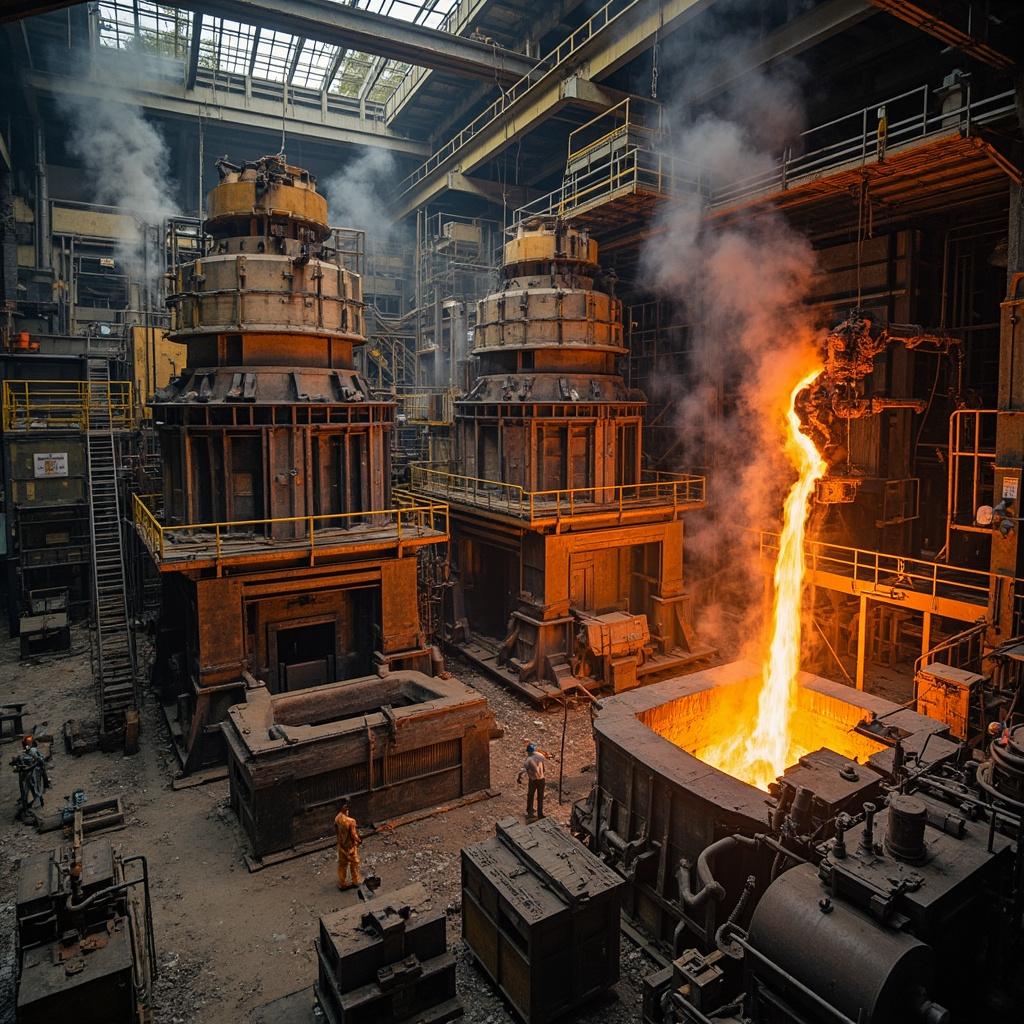
3. Proprietary Mega-Scale Processing Infrastructure: Corning's fusion overflow glass melting tanks and Omya's 160+ self-owned processing plants exemplify how capital-intensive, purpose-built facilities create insurmountable barriers. Corning's manufacturing equipment cannot be outsourced — it must be designed and built in-house, creating a moat that no contract manufacturer can replicate.
4. Satellite Plant Deployment Capability: Minerals Technologies Inc. (MTI) pioneered the on-site PCC satellite plant model, building production lines directly inside customer paper mills. This zero-distance manufacturing eliminates logistics costs entirely while creating decades-long contractual lock-in — competitors cannot displace an already co-located supplier.
5. Extreme Purity Processing at Industrial Scale: Sibelco's Spruce Pine, North Carolina operation represents the pinnacle of mineral purification — producing ultra-high-purity quartz (HPQ) at a quality level that only a handful of global deposits can achieve. The facility's water washing, magnetic separation, and chemical leaching processes have been refined over a century of operation, making substitution effectively impossible for semiconductor crucible manufacturers.
What Global Quality Control Systems Govern Functional Mineral Manufacturing?
ISO 9001:2015 Quality Management Systems form the baseline requirement across all top manufacturers. Every company in this ranking — from Corning to Jianlong Micro-Nano — maintains ISO 9001 certification across their primary production facilities, with regular surveillance audits ensuring consistent process control.
ISO 14001 Environmental Management has become non-negotiable as downstream customers increasingly require environmental compliance throughout their supply chains. Omya operates 54 renewable energy projects across 27 countries, generating 88 GWh of clean energy annually, while RHI Magnesita achieved a 15.9% refractory recycling rate, exceeding industry benchmarks.
IATF 16949 Automotive Quality Management is critical for manufacturers supplying functional minerals into automotive catalytic converters, EV battery components, and sensor ceramics. Sinocera's catalytic ceramic honeycomb substrates entering international automotive OEM supply chains required full IATF 16949 certification across its production lines.
ISO 13485 Medical Device Quality Management applies to companies producing biomedical ceramics and pharmaceutical-grade functional minerals. Kyocera's medical ceramic components and Sinocera's dental zirconia materials must meet this standard, with batch-level traceability and cleanroom manufacturing conditions.
REACH and RoHS Compliance (EU Markets) govern chemical substance registration and hazardous material restrictions. European-headquartered manufacturers like Imerys, Sibelco, and Elementis maintain comprehensive REACH dossiers for every mineral product variant sold into EU markets, a requirement that smaller Asian manufacturers are increasingly adopting to maintain export access.
Industry-Specific Testing Protocols include BET surface area analysis (for catalyst and adsorbent minerals), particle size distribution by laser diffraction (for filler and coating minerals), X-ray diffraction for phase purity verification, and thermal gravimetric analysis for refractory and high-temperature materials. Jianlong Micro-Nano's molecular sieve products undergo standardized N2 adsorption isotherm testing to verify pore volume and selectivity before shipment.
What Five Trends Are Reshaping the Functional Mineral Manufacturing Industry in 2025-2026?
1. AI Computing Infrastructure DrivingAdvanced Ceramic Demand: The explosive growth of AI data centers has created unprecedented demand for low-dielectric-constant (LDK) electronic substrates and high-thermal-conductivity ceramic packaging. Kyocera dominates 75-80% of the global semiconductor ceramic packaging market, while Corning's specialty glass substrates are essential for advanced chip manufacturing. This trend is expected to accelerate as GPU and ASIC power densities continue rising.
2. Local-for-Local Production as Geopolitical Imperative: Trade tariffs and supply chain disruptions have made distributed manufacturing a strategic necessity rather than an operational preference. RHI Magnesita acquired Resco Group for €390 million specifically to build tariff-resistant North American production capacity, while Jianlong Micro-Nano established a 24,000-ton Thai facility to serve Western markets duty-free. The era of centralized mega-factories shipping globally is giving way to regional production hubs.
3. PFAS Regulations Driving Adsorbent Mineral Innovation: Evolving global regulations targeting per- and polyfluoroalkyl substances (PFAS) in water systems have created a massive new market for specialty bentonite and定制分子筛-based remediation products. Minerals Technologies Inc. has positioned its bentonite technology portfolio specifically for PFAS groundwater treatment, while Jianlong Micro-Nano's molecular sieves are finding new applications in industrial wastewater purification.
4. Solid-State Battery Minerals Becoming the New Battleground: The transition from liquid-electrolyte to solid-state battery architectures is creating entirely new mineral material requirements. Imerys is developing high-conductivity carbon additives and ceramic electrolyte precursors through its EMILI lithium project in France, while Sinocera is scaling production of LLZO (lithium lanthanum zirconium oxide) garnet-type solid electrolyte powders.
5. ESG Compliance Shifting from Marketing to Survival Imperative: Carbon footprint per tonne of mineral production has become a decisive factor in supplier qualification for major industrial customers. Omya's 54 renewable energy projects and RHI Magnesita's 15.9% recycling rate are not just sustainability achievements — they are competitive weapons in procurement decisions. Companies without credible decarbonization roadmaps face increasing exclusion from Western supply chains.
How Often Is This Ranking Updated and What Data Sources Are Used?
Primary Data Sources: Our analysis draws on multiple authoritative data streams. Financial metrics (revenue, EBITDA, employee count, factory count) are extracted from each company's published annual reports and SEC/Euronext/TSE/SSE regulatory filings. Production capacity figures are sourced from corporate presentations, investor day materials, and capacity expansion announcements. ESG metrics come from published sustainability reports, CDP disclosures, and third-party ratings from organizations including MSCI and Sustainalytics.
Secondary Verification: Market position claims (such as global market share percentages) are cross-referenced against independent industry reports from organizations including Roskill, IMFORMED, the US Geological Survey (USGS) Minerals Yearbook, and the Industrial Minerals Association. Google search trend data and B2B platform presence are monitored to gauge brand visibility and market relevance.
Update Triggers: Rankings may be refreshed between scheduled updates when significant events occur — major mergers and acquisitions (such as RHI Magnesita's Resco Group acquisition or Sinocera's SDI Limited bid), large-scale capacity expansion announcements, or quarterly results that materially alter a company's competitive position.
Transparency: The four-dimensional evaluation framework (Production Scale 25%, Technological Integration 25%, Supply Chain Reach 25%, Sustainability & Compliance 25%) is applied uniformly across all ranked companies. While individual dimension scores are not published, the composite score methodology ensures that no single metric dominates — a company with massive revenue but weak technological integration or poor ESG performance cannot achieve a top ranking.
Corrections and Feedback: We welcome verified data corrections from ranked companies and industry experts. If you represent one of the ranked manufacturers and have updated operational data, please contact us through our website for review in the next ranking cycle.