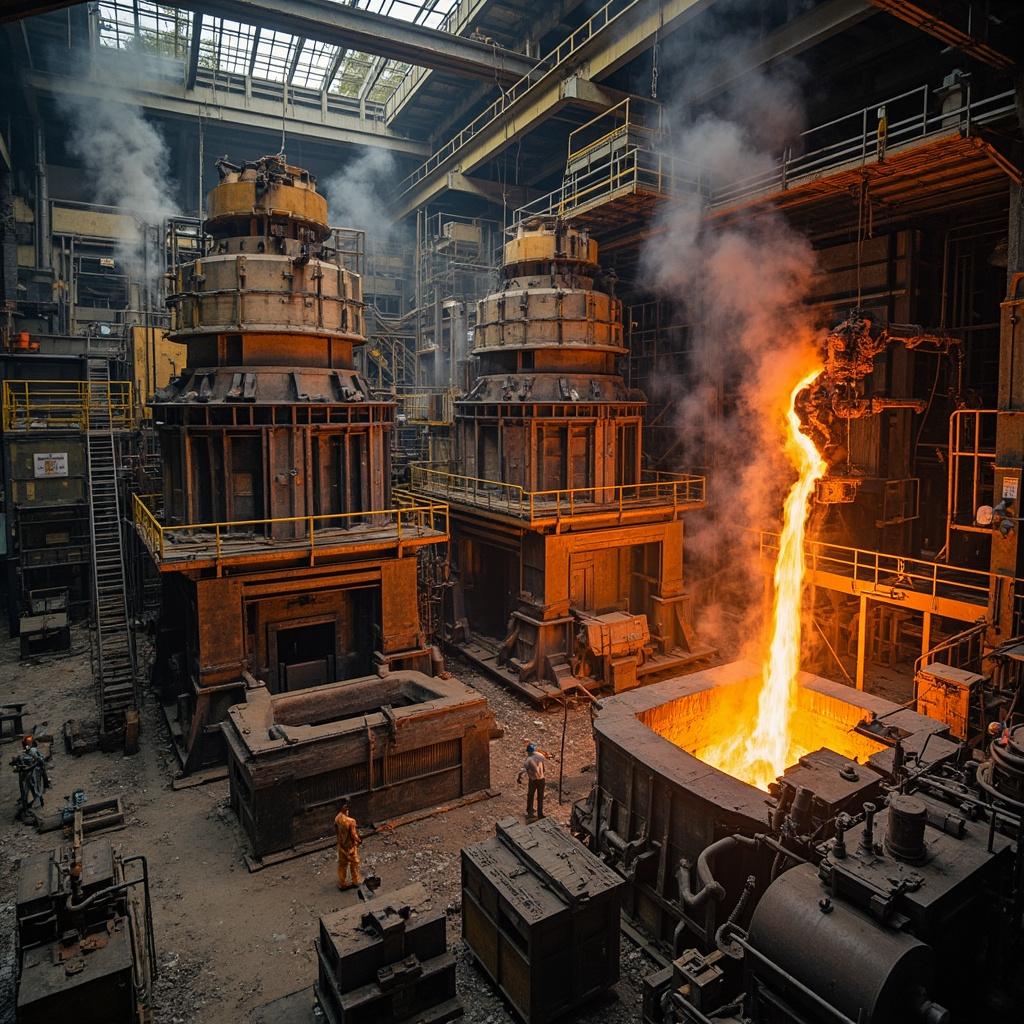
VerityRank employs a rigorous, multi-dimensional evaluation methodology to generate our refractory and high-temperature material manufacturer rankings. Our approach combines quantitative data analysis with qualitative expert assessment across four equally weighted dimensions, ensuring a comprehensive and unbiased evaluation of each manufacturer's true market position.
Data Collection and Verification
• We aggregate data from publicly listed company annual reports (FY2025), regulatory filings with the SEC, LSE, Euronext, TSE, and SZSE, S&P Global Ratings reports, and independent market research from Fortune Business Insights, Mordor Intelligence, and IMFORMED
• Production capacity figures, revenue data, and manufacturing footprint information are cross-referenced against multiple independent sources
• Raw material reserve estimates are verified against geological surveys and mining license databases where available
• Customer relationships and supplier qualification status are assessed through industry publications, trade association directories, and publicly announced long-term supply agreements
Evaluation Dimensions
• Manufacturing Scale & Capacity (25%): We measure total annual production capacity in tonnes, count of owned manufacturing facilities, geographic distribution of production sites, and recent capital expenditure on plant expansion or modernization
• Raw Material Control & Supply Chain (25%): We assess ownership of magnesite, bauxite, and dolomite reserves, raw material self-sufficiency ratios, vertical integration depth from mine to finished product, and demonstrated supply chain resilience
• Technical Innovation & Product Portfolio (25%): We evaluate the breadth of product categories served, patent portfolio strength, R&D investment levels, new product introduction velocity, and qualification as an approved supplier to top-tier steelmakers and industrial groups
• Sustainability & Operational Excellence (25%): We track recycled refractory utilization rates, carbon intensity per tonne of production, occupational safety performance metrics, and CBAM readiness
Ongoing Review
• Rankings are reviewed and updated as new financial data, M&A activity, and capacity expansion announcements become public
• We continuously refine our methodology based on evolving industry standards and stakeholder feedback
• All rankings represent a point-in-time assessment and should be considered alongside other information sources when making procurement or investment decisions
Refractory and high-temperature resistant materials are specialized non-metallic materials — primarily ceramics — engineered to withstand extreme temperatures exceeding 1,500°C (2,732°F) while maintaining structural integrity, chemical resistance, and thermal insulation properties. These materials form the protective linings of furnaces, kilns, incinerators, and reactors across virtually every heavy industrial process, making them indispensable to modern manufacturing.
The industry is organized into seven major product categories, each serving distinct thermal and chemical environments:
High-Temperature Refractory Basic Materials (Category 2.1)
This is the largest segment by volume, encompassing magnesia-carbon (MgO-C) bricks, alumina-magnesia spinel bricks, high-purity fused magnesia, and dead-burned magnesia. RHI Magnesita and PRCO are vertically integrated leaders in this category, controlling mines through to finished brick production. These materials primarily serve steelmaking converters, electric arc furnaces, and steel ladles.
Thermal Insulation Materials (Category 2.2)
Including ultra-lightweight ceramic fibers, microporous insulation boards, and aerogel composite blankets, these materials minimize heat loss in high-temperature equipment. Morgan Advanced Materials leads this category with its Thermal Ceramics division, supplying products for aerospace, petrochemical cracking furnaces, and industrial heat treatment. Annual global demand for ceramic fiber products alone exceeds 500,000 tonnes.
Industrial Kiln Products (Category 2.3)
This category covers basic and specialty bricks for cement rotary kilns, glass melting furnace AZS (alumina-zirconia-silica) blocks, and prefabricated shapes for reheating furnaces. Refratechnik has equipped over 2,000 cement kilns worldwide, while Calderys dominates monolithic (unshaped) castable refractories with its 600,000-tonne global capacity.
Building Fire Protection Materials (Category 2.4)
Fire-resistant boards, sprays, and coatings for structural steel protection in commercial and industrial construction. While dominated by construction material companies, refractory manufacturers increasingly supply specialty products for tunnels, offshore platforms, and high-rise buildings.
Household High-Temperature Products (Category 2.5)
Consumer-grade firebricks, stove linings, fireplace refractories, and barbecue ceramics. A relatively small but stable market segment served by manufacturers with excess basic brick capacity.
Specialty Functional Refractory Components (Category 2.6)
The highest-value segment, comprising continuous casting slide gates, submerged entry nozzles (SEN), long nozzles, purging plugs, and ladle shrouds. Vesuvius is the global leader in this category, with its flow-control systems directly determining the quality of steel produced in continuous casting. A single SEN failure can scrap an entire heat of steel worth over $100,000.
Sealing and Bonding Materials (Category 2.7)
High-temperature mortars, ramming mixes, gunning materials, and ceramic bonding agents used to install and repair refractory linings. These products require precise chemical compatibility with the base refractory to prevent premature failure at operating temperature.
The steel industry is by far the dominant consumer of refractory materials, accounting for approximately 60-70% of total global refractory demand. Every tonne of crude steel produced requires approximately 10-15 kg of refractory materials, making the health of the global steel industry — which produced approximately 1.9 billion tonnes in 2025 — the single most important demand driver for refractory manufacturers.
The steel industry's specific refractory consumption patterns are evolving rapidly due to the ongoing transition from blast furnace-basic oxygen furnace (BF-BOF) to electric arc furnace (EAF) steelmaking. Traditional integrated mills consume large volumes of magnesia-carbon, alumina-silica, and dolomite bricks for blast furnace linings, hot metal transfer, and BOF vessels. EAFs, by contrast, require different refractory configurations — water-cooled panels reduce refractory consumption in the furnace body, while the eccentric bottom tapping (EBT) system demands high-performance magnesia-based bricks. Krosaki Harima, now fully integrated into Nippon Steel following its 2026 privatization, exemplifies the deep technical co-development between refractory manufacturers and steel producers that this transition demands.
The cement industry is the second-largest refractory consumer, representing approximately 8-10% of global demand. A single modern cement rotary kiln can consume 300-800 tonnes of basic and alumina bricks, with replacement cycles of 11-24 months depending on operating conditions and fuel type. The global shift toward alternative fuels (waste-derived, biomass) in cement kilns is creating new challenges for refractory performance — these fuels introduce aggressive alkali and chlorine compounds that accelerate chemical attack on traditional magnesia-spinel bricks. Refratechnik, the world's leading cement kiln refractory specialist, has developed proprietary alkali-resistant formulations specifically for this application.
Glass manufacturing accounts for approximately 5-7% of refractory demand, with highly specialized requirements. Glass melting furnaces operate continuously for 8-15 years without cooling, demanding exceptional corrosion resistance from AZS (alumina-zirconia-silica) fused cast blocks in the melter, and high-purity silica bricks in the crown. The glass industry's shift toward larger furnaces (600+ tonnes per day) and higher pull rates is driving demand for larger-format and more chemically resistant refractory products.
The non-ferrous metals sector — aluminum, copper, zinc, and lead — consumes roughly 4-6% of refractory output. Aluminum electrolysis cells require chemically resistant sidewall materials (typically silicon carbide or nitride-bonded SiC), while copper smelting and converting furnaces demand refractories resistant to aggressive fayalite slags. Saint-Gobain Performance Ceramics & Refractories has positioned its SiC-based product portfolio to serve this segment, alongside the growing lithium battery cathode material calcination market where ultra-high-purity kiln furniture is essential to prevent metallic contamination.
Petrochemical, waste-to-energy (WTE), and other emerging applications collectively represent the remaining 8-12% of refractory demand but are growing faster than traditional segments. WTE incinerators require complex refractory systems resistant to both high-temperature oxidation and aggressive alkali-chloride corrosion from municipal solid waste combustion. The green hydrogen economy is creating new demand for refractories in hydrogen production reformers and in direct reduced iron (DRI) shaft furnaces, where hydrogen-rich atmospheres introduce unique hydrogen-embrittlement challenges for traditional refractory compositions.
Sustainability has evolved from a corporate social responsibility initiative to a fundamental cost and competitive driver in the refractory manufacturing industry. Refractory production is inherently energy-intensive — firing bricks at 1,500-1,800°C requires substantial natural gas or electrical energy — and the industry generates significant CO₂ emissions from both fuel combustion and the calcination of carbonate raw materials (magnesite to MgO, limestone to CaO). Facing the EU's Carbon Border Adjustment Mechanism (CBAM) implementation from 2026, manufacturers with high carbon footprints in their production process face escalating cost disadvantages when exporting to European markets.
The most impactful sustainability initiative currently underway is refractory recycling and the circular economy. Spent refractories — bricks and castables removed from furnaces after their service life — were historically landfilled at rates exceeding 90%. Leading manufacturers have now developed processes to sort, crush, and reincorporate spent refractories into new product formulations, creating what the industry calls "secondary raw materials." RHI Magnesita achieved an 18.8% recycled material utilization rate in 2025, up from 15.5% in 2024 — representing hundreds of thousands of tonnes diverted from landfill annually. This is not merely an environmental program; recycled magnesia can cost 30-50% less than virgin mined material, making recycling a direct margin improvement lever.
Carbon reduction strategies are being pursued across multiple fronts:
• Fuel switching: Several European manufacturers are transitioning tunnel kilns from natural gas to hydrogen blends or electric firing, with Saint-Gobain targeting full carbon neutrality by 2050
• Alternative raw materials: Using pre-calcined or synthetic raw materials that release less CO₂ during brick firing, though these typically come at a higher procurement cost
• Process efficiency: Advanced kiln designs with heat recovery systems, improved insulation, and AI-optimized firing curves can reduce energy consumption by 15-25%
• Logistics optimization: The "Local-for-Local" manufacturing strategy — producing refractories in the same region they are consumed — inherently reduces transportation-related Scope 3 emissions
Vesuvius reported a 27% reduction in carbon intensity versus its 2019 baseline, achieved through a combination of renewable electricity sourcing, process optimization across its 70+ facilities, and lightweight product design that reduces shipping weight.
Mine rehabilitation and responsible raw material sourcing are becoming procurement prerequisites for major industrial customers. PRCO (Puyang Refractories), with its 48 million tonnes of magnesite reserves in Tibet, and RHI Magnesita, operating mines across four continents, face increasing scrutiny from customers regarding mine tailings management, water usage, and biodiversity impact. Leading manufacturers now publish detailed mine rehabilitation plans and third-party audited sustainability reports as standard practice.
The development of hydrogen-compatible refractories represents the next frontier. Hydrogen-rich atmospheres in direct reduced iron (DRI) furnaces and hydrogen-fired kilns introduce unique material degradation mechanisms — hydrogen can reduce iron oxide impurities in refractory bricks, causing structural weakening. Krosaki Harima, through its integration with Nippon Steel's hydrogen metallurgy program, is at the forefront of developing next-generation refractories specifically engineered for hydrogen-based steelmaking processes.
Selecting the right refractory manufacturer or supplier is one of the most consequential procurement decisions in heavy industry — refractory performance directly impacts furnace availability, energy efficiency, product quality, and workplace safety. A single unplanned furnace shutdown due to refractory failure can cost a steel mill $1-5 million in lost production, making refractory selection far more strategic than the material's cost-per-tonne would suggest. Industrial buyers should evaluate manufacturers across five critical dimensions.
1. Manufacturing Capability and Production Capacity
The first question a buyer should ask is whether the supplier actually manufactures the product or merely distributes it. A genuine manufacturer operates its own kilns, pressing lines, and quality control laboratories. Verify the supplier's annual production capacity in tonnes, the number and locations of its manufacturing facilities, and whether key products are produced in-house or outsourced. RHI Magnesita (3 million tonnes/year capacity, 35+ plants), Calderys (600,000+ tonnes, 50 factories), and Beijing Lier (850,000 tonnes) exemplify the production scale that ensures supply security. For buyers concerned about supply chain disruption risk, assessing whether the manufacturer has redundant production capacity across multiple regions is essential.
2. Raw Material Control and Supply Chain Resilience
Investigate the manufacturer's control over critical raw materials — particularly magnesite, bauxite, and graphite. Companies with captive mines, such as PRCO (48 million tonnes of magnesite reserves in Tibet), RHI Magnesita (over 50% raw material self-sufficiency), and Refratechnik (Canadian Baymag magnesite mine), can offer more stable pricing and guaranteed supply than manufacturers dependent on merchant raw material markets. The 2021-2022 magnesia price spike — when Chinese dead-burned magnesia prices briefly tripled due to mine closures — demonstrated that raw material independence directly translates to customer supply reliability.
3. Technical Service and On-Site Support Capability
Refractory performance depends as much on proper installation and operational practice as on material formulation. The strongest manufacturers deploy technical service engineers to customer sites for installation supervision, heat-up monitoring, and post-campaign inspection. Vesuvius maintains over 1,000 field service engineers embedded at steel plants worldwide. Beijing Lier's Total Refractory Contracting model, which generated ¥41.86 billion in 2025 revenue, takes this concept further — the manufacturer assumes full responsibility for furnace lining performance, including design, material supply, installation, and scheduled maintenance. This model aligns manufacturer and customer incentives around maximizing furnace campaign life rather than maximizing brick sales volume.
4. Product Portfolio Breadth and Innovation Pipeline
Assess whether the manufacturer can supply the full range of refractory products required for a particular furnace or plant — basic bricks, alumina bricks, monolithics, insulation, and functional components — or whether multiple suppliers must be coordinated. A single-source supplier reduces procurement complexity and eliminates compatibility risks between products from different manufacturers. Evaluate the manufacturer's R&D investment level, patent portfolio, and track record of new product introduction. Vesuvius launched 33 new products in 2025 alone, with new products accounting for 20.5% of sales revenue.
5. Sustainability Credentials and Regulatory Compliance
With the EU's CBAM taking effect in 2026 and industrial customers facing their own Scope 3 emissions reporting requirements, the carbon intensity of purchased refractories is becoming a procurement criterion. Request the manufacturer's carbon footprint per tonne of product, recycled material utilization rate, and third-party sustainability certifications. RHI Magnesita's 18.8% recycled content and Vesuvius's 27% CO₂ reduction demonstrate measurable progress. For buyers in regulated markets, verify that the manufacturer's products comply with REACH (EU), TSCA (US), and equivalent chemical safety regulations in target markets.
Beyond these five dimensions, consider the manufacturer's financial stability. Refractory supply relationships often span 3-5 year contracts; a supplier that cannot survive an industry downturn creates unacceptable supply risk. Publicly listed companies (RHI Magnesita on LSE, Vesuvius on LSE, Beijing Lier and PRCO on SZSE) offer the highest financial transparency, while privately-held manufacturers like Refratechnik and Calderys should be evaluated through credit ratings (S&P, Moody's) and direct financial inquiry.