维瑞评级的制造商评估方法基于对公开可验证数据的定量分析。我们的研究团队汇总来自公司年报、美国证券交易委员会及同等监管文件、证券交易所披露、行业协���出版物和独立市场研究数据库的信息。每个制造商从四个权重相等的维度进行评估:
生产规模与产能(25%)
• 原油加工量,以百万桶/日计
• 通过尼尔森复杂性指数衡量的炼油复杂性
• 总碳氢化合物产量,包括原油、天然气和天然气液
• 重点强调全资拥有和运营的制造设施
供应链整合(25%)
• 从上游生产到零售分销的端到端垂直整合
• 管道基础设施、存储终端和液化天然气液化能力
• 零售加油站网络覆盖范围和地理广度
• 原油采购灵活性和供应商多元化
产品组合多元化(25%)
• 燃料产品范围:液态化石、气态、生物基和特种工业燃料
• 可再生燃料制造:乙醇、可再生柴油、可持续航空燃料
• 石化副产品整合,捕获更高利润的化工流
• 品牌燃料和润滑油产品线实力
财务韧性与创新(25%)
• 收入规模、营业利润率和自由现金流生成
• 低碳和替代燃料技术的研发投资
• 可再生燃料产能扩张的资本支出
• 对能源转型和监管变化的适应能力
所有评估均基于证据和数据驱动。我们的排名每半年更新一次,以反映最新的财务业绩、产能增加和战略发展。我们不接受排名位置的付款,确保完全的编辑独立性。
VerityRank's manufacturer evaluation methodology is built on quantitative analysis of publicly verifiable data. Our research team aggregates information from corporate annual reports, SEC and equivalent regulatory filings, stock exchange disclosures, industry association publications, and independent market research databases. Each manufacturer is assessed across four equally weighted dimensions:
Production Scale & Capacity (25%)
• Crude processing throughput measured in million barrels per day
• Refining complexity via the Nelson Complexity Index
• Total hydrocarbon production including crude oil, natural gas, and NGLs
• Emphasis on wholly-owned and operated manufacturing facilities
Supply Chain Integration (25%)
• End-to-end vertical integration from upstream production to retail distribution
• Pipeline infrastructure, storage terminals, and LNG liquefaction capacity
• Retail fuel station network coverage and geographic breadth
• Crude sourcing flexibility and supplier diversification
Product Portfolio Diversification (25%)
• Range of fuel products: liquid fossil, gaseous, bio-based, and specialty industrial fuels
• Renewable fuel manufacturing: ethanol, renewable diesel, sustainable aviation fuel
• Petrochemical co-product integration capturing higher-margin chemical streams
• Branded fuel and lubricant product line strength
Financial Resilience & Innovation (25%)
• Revenue scale, operating margins, and free cash flow generation
• R&D investment in low-carbon and alternative fuel technologies
• Capital expenditure on renewable fuel capacity expansion
• Adaptability to energy transition and regulatory changes
All assessments are evidence-based and data-driven. Our rankings are updated semi-annually to reflect the latest financial results, capacity additions, and strategic developments. We do not accept payment for ranking placement, ensuring complete editorial independence.
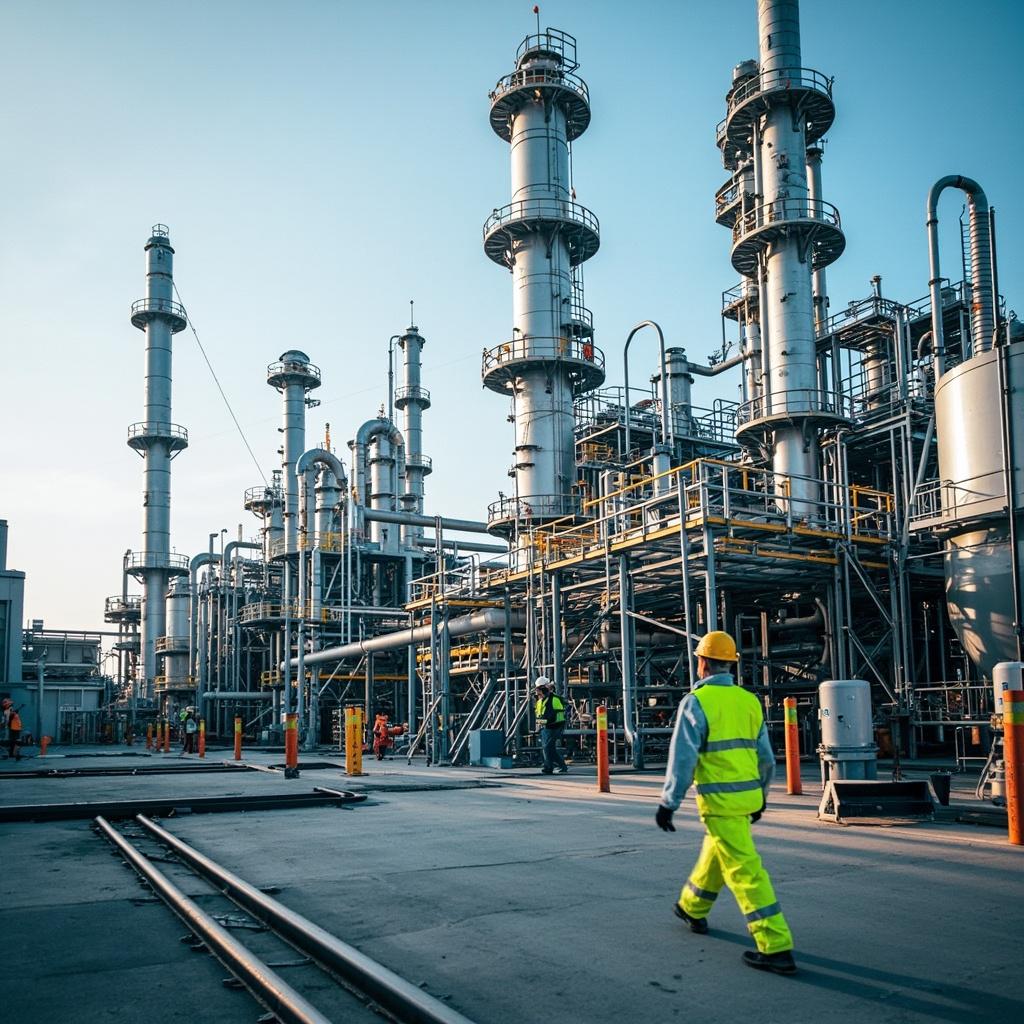
燃料和气态能源领域的制造卓越性从根本上由炼油加工能力、复杂性和原料灵活性决定——而非上游石油储量。世界上最有能力的燃料制造商运营着综合炼油-石化联合体,能够每天加工100-300万桶原油,尼尔森复杂性指数超过12.0,使其能够将最重、含硫量最高的原油等级转化为优质运输燃料和化工原料。
炼油规模和资产质量
• 沙特阿美运营着世界上最大的原油生产网络,产能为1240万桶/日,全球炼油加工量为410万桶/日
• 中国石化在30多个世界级综合炼油-石化联合体中每年加工5亿桶原油——全球任何制造商中最高的总加工量
• 信实工业的贾姆讷格尔联合体仍然是世界上最大的单址炼油厂,产能为140万桶/日,复杂性极高
原料灵活性
顶级制造商通过加工不同原油等级的能力脱颖而出。独立炼油商如瓦莱罗能源和信实工业通过加工不太复杂的设施无法经济处理的折价重质高硫原油获利。这种灵活性提供了比简单炼油配置每桶2-5美元的结构性利润优势。
可再生燃料制造整合
制造卓越性的下一个前沿涉及传统炼油资产的共址和转换,用于可再生燃料生产。瓦莱罗能源体现了这一转变:除了每天300万桶的传统炼油能力,该公司还运营12家乙醇工厂(17亿加仑/年),是世界第二大可再生柴油生产商,并已投产超过2.35亿加仑/年的可持续航空燃料产能。
所有领先制造商的共同点是完全拥有和运营生产资产。依赖合同制造或品牌授权模式而没有实体生产设施的公司被明确排除在此排名之外。
Manufacturing excellence in the fuels and gaseous energy sector is fundamentally determined by refining throughput capacity, complexity, and feedstock flexibility—not upstream oil reserves. The world's most capable fuel manufacturers operate integrated refining-petrochemical complexes capable of processing 1-3 million barrels of crude oil per day with Nelson Complexity Index scores exceeding 12.0, enabling them to convert the heaviest, highest-sulfur crude grades into premium transportation fuels and chemical feedstocks.
Refining Scale and Asset Quality
• Saudi Aramco operates the world's largest crude production network with 12.4 million barrels per day of capacity and 4.1 million barrels per day of global refining throughput
• Sinopec processes 500 million barrels of crude annually across 30+ world-scale integrated refining-petrochemical complexes—the highest total throughput of any manufacturer globally
• Reliance Industries' Jamnagar complex remains the world's largest single-site refinery with 1.4 million barrels per day capacity and exceptional complexity
Feedstock Flexibility
Top-tier manufacturers distinguish themselves by their ability to process diverse crude grades. Independent refiners like Valero Energy and Reliance Industries profit from processing discounted heavy and sour crudes that less sophisticated facilities cannot economically handle. This flexibility provides a structural margin advantage of $2-5 per barrel over simpler refinery configurations.
Renewable Fuel Manufacturing Integration
The next frontier of manufacturing excellence involves the co-location and conversion of traditional refining assets for renewable fuel production. Valero Energy exemplifies this transition: in addition to 3 million barrels per day of traditional refining, the company operates 12 ethanol plants (1.7 billion gallons/year), is the world's second-largest renewable diesel producer, and has commissioned 235+ million gallons per year of sustainable aviation fuel (SAF) capacity.
The common thread across all leading manufacturers is complete ownership and operation of production assets. Companies relying on contract manufacturing (OEM) or brand-licensing models without physical production facilities are categorically excluded from this ranking.
燃料产品质量受制于复杂的国际标准、区域规格和环境法规网络,制造商必须在数十个司法管辖区同时应对这些要求。最有能力的制造商维护内部测试实验室、专有催化剂技术和实时过程监控系统,超出监管最低要求。
国际燃料标准
• ASTM D4814/D975:北美汽油和柴油的标准规格,涵盖辛烷值、十六烷值、硫含量和蒸馏特性
• EN 228/EN 590:欧洲燃料质量标准,强制要求超低硫柴油(≤10 ppm)和生物燃料混合要求
• ISO 8217:国际船用燃料标准,指定渣油和馏分船用燃料的参数,对全球航运合规至关重要
• 国六:中国���2020年起实施的排放标准,在硫含量和颗粒物方面属于世界上最严格的标准之一
质量保证基础设施
主要制造商运营广泛的质量控制网络。壳牌维护超过10家润滑脂工厂和4家基础油工厂,配备专用质量实验室,而埃克森美孚运营21家成品润滑油调配厂,采用专有测试协议。雪佛龙的Oronite添加剂部门开发和测试满足180多个国家规格的燃料添加剂。
可再生燃料认证
对于生物基燃料,适用额外的认证框架:可持续生物材料圆桌会议、国际可持续性和碳认证以及美国环保署可再生燃料标准路径批准。瓦莱罗的Diamond Green Diesel设施为其可再生柴油和可持续航空燃料产品保持ISCC和RSB双重认证,使其能够进入加利福尼亚州(低碳燃料标准)和欧盟(可再生能源指令III)的溢价市场。
排放和环境合规
除了燃料规格,制造商面临越来越严格的温室气体排放报告要求。道达尔能源和BP已实施全面的范围一、二、三排放跟踪,而整个行业正在应对各司法管辖区不断变化的甲烷泄漏检测和修复法规。
Fuel product quality is governed by an intricate web of international standards, regional specifications, and environmental regulations that manufacturers must navigate simultaneously across dozens of jurisdictions. The most capable manufacturers maintain in-house testing laboratories, proprietary catalyst technologies, and real-time process monitoring systems that exceed regulatory minimums.
International Fuel Standards
• ASTM D4814/D975: Standard specifications for gasoline and diesel fuel in North America, governing octane ratings, cetane numbers, sulfur content, and distillation properties
• EN 228/EN 590: European fuel quality standards mandating ultra-low sulfur diesel (≤10 ppm) and biofuel blending requirements
• ISO 8217: International marine fuel standards specifying parameters for residual and distillate bunker fuels, critical for global shipping compliance
• China VI (China VI): China's emissions standards implemented since 2020, among the world's most stringent for sulfur content and particulate matter
Quality Assurance Infrastructure
Major manufacturers operate extensive quality control networks. Shell maintains over 10 grease plants and 4 base oil facilities with dedicated quality laboratories, while ExxonMobil operates 21 finished lubricant blending plants with proprietary testing protocols. Chevron's Oronite additives division develops and tests fuel additives that meet specifications across 180+ countries.
Renewable Fuel Certification
For bio-based fuels, additional certification frameworks apply: the Roundtable on Sustainable Biomaterials (RSB), International Sustainability and Carbon Certification (ISCC), and EPA Renewable Fuel Standard (RFS) pathway approvals. Valero's Diamond Green Diesel facility maintains dual ISCC and RSB certification for its renewable diesel and SAF products, enabling access to premium markets in California (LCFS) and the European Union (RED III).
Emissions and Environmental Compliance
Beyond fuel specifications, manufacturers face increasingly stringent greenhouse gas emissions reporting requirements. TotalEnergies and BP have implemented comprehensive Scope 1, 2, and 3 emissions tracking, while the entire industry navigates evolving methane leak detection and repair (LDAR) regulations across jurisdictions.
全球燃料制造业正被三种变革力量重塑:交通电气化、可再生燃料生产规模化以及石化转型。这些趋势正在重新定义历史上由原油产量主导的行业的竞争优势。
1. 石化转型
随着全球电动汽车销量预计到2030年占新车销量的40%以上,传统燃料制造商正在将炼油厂产出转向高价值化学品。中国石化体现了这一转变:尽管2025年汽油销量下降2.5%,柴油销量下降9.1%,但该公司通过将化工产品销量提高到8710万吨来维持盈利能力。信实工业已承诺将其贾姆讷格尔炼油厂80%以上的产出转化为化学品,从燃料生产商转变为聚合物和聚酯制造巨头。
2. 可再生和生物基燃料规模化
可再生柴油和可持续航空燃料领域正在经历爆炸性增长。全球可再生柴油产能于2025年超过100亿加仑,瓦莱罗能源和耐思特是主要生产商。欧盟的可持续航空燃料强制令(ReFuelEU Aviation)和航空公司的自愿承诺(国际航空运输协会2050年净零目标)正在创造有保证的需求拉动。埃克森美孚最近在加拿大启动了Strathcona可再生柴油设施,而BP整合了其生物燃料业务,以捕捉地面交通和航空领域不断增长的需求。
3. 液化天然气和气态燃料主导地位
天然气和液化天然气被定位为连接煤炭/石油和可再生能源的过渡燃料。壳牌和道达尔能源控制着世界上最大的液化天然气交易组合,总产能超过每年7000万吨。中国石油通过其子公司大力投资天然气储存基础设施,将自己定位为中国主导的气态燃料供应商。
4. 地缘政治供应链重组
霍尔木兹海峡危机(2025-2026年)和红海航运中断加速了全球能源供应链的根本性重组。制造商正在多元化原油采购,扩大战略石油储备,并投资管道基础设施以绕过海上瓶颈。沙特阿美的东西管道——能够每天运输700万桶原油绕过海湾——已成为世界上最具战略重要性的能源基础设施资产之一。
5. 碳捕集和低碳技术
行业的运营许可越来越依赖于在脱碳方面取得切实进展。埃克森美孚在碳捕集与封存技术方面领先,进行了大量投资,而雪佛龙和道达尔能源正在开发蓝氢生产能力。美国《通胀削减法案》的45Q税收抵免(每吨二氧化碳储存85美元)为制造规模的碳捕集与封存创造了可行的经济模式。
The global fuel manufacturing industry is being reshaped by three transformative forces: the electrification of transportation, the scaling of renewable fuel production, and the petrochemical pivot. These trends are redefining competitive advantage in an industry historically dominated by crude oil production volume.
1. The Petrochemical Pivot
With global EV sales projected to account for 40%+ of new vehicle sales by 2030, traditional fuel manufacturers are redirecting refinery output toward high-value chemicals. Sinopec exemplifies this shift: despite a 2.5% decline in gasoline sales and 9.1% decline in diesel sales in 2025, the company maintained profitability by increasing chemical product sales to 87.1 million tonnes. Reliance Industries has committed to converting 80%+ of its Jamnagar refinery output to chemicals, transforming from a fuel producer into a polymer and polyester manufacturing powerhouse.
2. Renewable & Bio-Based Fuel Scaling
The renewable diesel and sustainable aviation fuel (SAF) sector is experiencing explosive growth. Global renewable diesel capacity surpassed 10 billion gallons in 2025, with Valero Energy and Neste as dominant producers. SAF mandates in the European Union (ReFuelEU Aviation) and voluntary airline commitments (IATA's net-zero 2050 target) are creating guaranteed demand pull. ExxonMobil recently launched its Strathcona renewable diesel facility in Canada, while BP integrated its biofuel operations to capture growing demand in both ground transportation and aviation sectors.
3. LNG and Gaseous Fuel Dominance
Natural gas and LNG are positioned as transition fuels bridging the gap between coal/oil and renewables. Shell and TotalEnergies control the world's largest LNG trading portfolios, with combined capacity exceeding 70 million tonnes per year. PetroChina has invested heavily in gas storage infrastructure through its subsidiaries, positioning itself as China's dominant gaseous fuel supplier.
4. Geopolitical Supply Chain Restructuring
The Strait of Hormuz crisis (2025-2026) and Red Sea shipping disruptions have accelerated a fundamental restructuring of global energy supply chains. Manufacturers are diversifying crude sourcing, expanding strategic petroleum reserves, and investing in pipeline infrastructure to bypass maritime chokepoints. Saudi Aramco's East-West Pipeline—capable of transporting 7 million barrels per day outside the Gulf—has become one of the world's most strategically critical energy infrastructure assets.
5. Carbon Capture and Low-Carbon Technologies
The industry's license to operate increasingly depends on demonstrated progress toward decarbonization. ExxonMobil leads with significant investments in carbon capture and storage (CCS) technologies, while Chevron and TotalEnergies are developing blue hydrogen production capabilities. The U.S. Inflation Reduction Act's 45Q tax credit ($85/tonne CO2 stored) has created a viable economic model for CCS at manufacturing scale.
维瑞评级的燃料和气态能源制造商与供应商排名每半年全面审查和更新一次——通常在每年6月和12月。此更新节奏与全球主要上市能源公司的财务报告周期一致,这些公司在第一季��发布详细年度业绩,第三季度发布中期业绩。
数据刷新周期
• 第一季度(3-4月):���克森美孚、雪佛龙、壳牌、BP、道达尔能源的年报和20-F文件;沙特阿美全年业绩
• 第一至第二季度(3-5月):中国国有企业包括中国石化和中国石油发布年度业绩
• 第三季度(8-10月):主要国际石油公司和国家石油公司的半年度和第二季度中期业绩
• 持续:重大并购交易、产能扩张公告、监管变化和地缘政治事件可能触发非周期更新
什么会触发更新?
除了定期审查周期,排名位置可能在以下情况下重新评估:
• 制造商宣布交易价值超过10亿美元的合并、收购或重大资产剥离
• 重大新产能投产(例如,主要炼油厂或可再生燃料工厂投产)
• 监管发展从根本上改变市场结构,例如新的可持续航空燃料混合强制令或碳定价机制
• 像2025年霍尔木兹海峡危机这样对生产和供应链产生重大影响的特殊事件
更新透明度
每次排名更新都附有详细的方法说明,解释评估标准、数据来源或权重方法的任何变化。历史排名位置被保留,以允许对制造商轨迹进行纵向分析。用户可以通过维瑞评级档案访问以前的版本。
我们欢迎制造商提交数据。如果贵公司的���开财务或运营数据已更新,或者您希望为我们的分析师提供补充文件,请通过维瑞评级网站联系我们的研究团队。所有提交内容在纳入前均与独立数据来源进行验证。
VerityRank's Fuels and Gaseous Energy Manufacturers & Suppliers ranking is comprehensively reviewed and updated on a semi-annual basis—typically in June and December of each year. This update cadence aligns with the financial reporting cycles of the world's major publicly-listed energy corporations, which release detailed annual results in Q1 and interim results in Q3.
Data Refresh Cycle
• Q1 (March-April): Annual reports and 20-F filings from ExxonMobil, Chevron, Shell, BP, TotalEnergies; Saudi Aramco full-year results
• Q1-Q2 (March-May): Chinese state-owned enterprises including Sinopec and PetroChina release annual results
• Q3 (August-October): Semi-annual and Q2 interim results from major IOCs and NOCs
• Ongoing: Major M&A transactions, capacity expansion announcements, regulatory changes, and geopolitical events may trigger off-cycle updates
What Triggers an Update?
Beyond the scheduled review cycle, ranking positions may be reassessed when:
• A manufacturer announces a merger, acquisition, or major divestiture exceeding $1 billion in transaction value
• Significant new production capacity comes online (e.g., commissioning of a major refinery or renewable fuel plant)
• Regulatory developments fundamentally alter market structure, such as new SAF blending mandates or carbon pricing mechanisms
• Extraordinary events like the 2025 Strait of Hormuz crisis that materially impact production and supply chains
Transparency in Updates
Each ranking update is accompanied by a detailed methodology note explaining any changes in assessment criteria, data sources, or weighting methodology. Historical ranking positions are preserved to allow longitudinal analysis of manufacturer trajectories. Users can access previous versions through VerityRank's archives.
We welcome data submissions from manufacturers. If your company's publicly available financial or operational data has been updated, or if you wish to provide supplementary documentation for our analysts, please contact our research team through the VerityRank website. All submissions are verified against independent data sources before incorporation.